

Quick summary: Qase and Autonoma solve different problems, even though people search for one as an "alternative" to the other. Qase is a well-designed test case management (TCM) platform (free for 3 users, $24-36/user/month paid) for organizing, tracking, and reporting on test cases that humans write. If you need TCM specifically, Qase, TestRail, and Zephyr Scale are the right category. Autonoma is an open-source AI testing platform: it generates E2E tests directly from your codebase and executes them against real preview environments, with automatic maintenance as your app changes. It does not manage test cases. Full source code on GitHub (BSL 1.1), self-hosting, unlimited parallels. Free tier: 100K credits. Cloud: $499/month. Self-hosted: infrastructure cost only.
Qase is arguably the best-designed test management tool on the market. Clean UI, API-first architecture, thoughtful developer experience. If you need a platform to organize manual and automated test cases, Qase is a strong choice. But a lot of teams land here searching for an "alternative to Qase" when what they actually want is a way to stop hand-writing and hand-maintaining E2E tests, which is a different problem than organizing them.
Test management platforms like Qase are built to make it easier to organize, track, and report on test cases that humans write and maintain. That is a real and valuable job. It is just not the same job as generating and running the tests themselves. Autonoma takes a different approach to that second job: AI generates E2E tests directly from your codebase, executes them against real preview environments, and keeps them updated automatically as your app changes.
This guide covers where Qase's category has real limits for teams that also need automated E2E coverage, how Autonoma approaches that problem differently, and how the two can fit together (or how to pick one over the other).
Where Qase's Category Has Limits
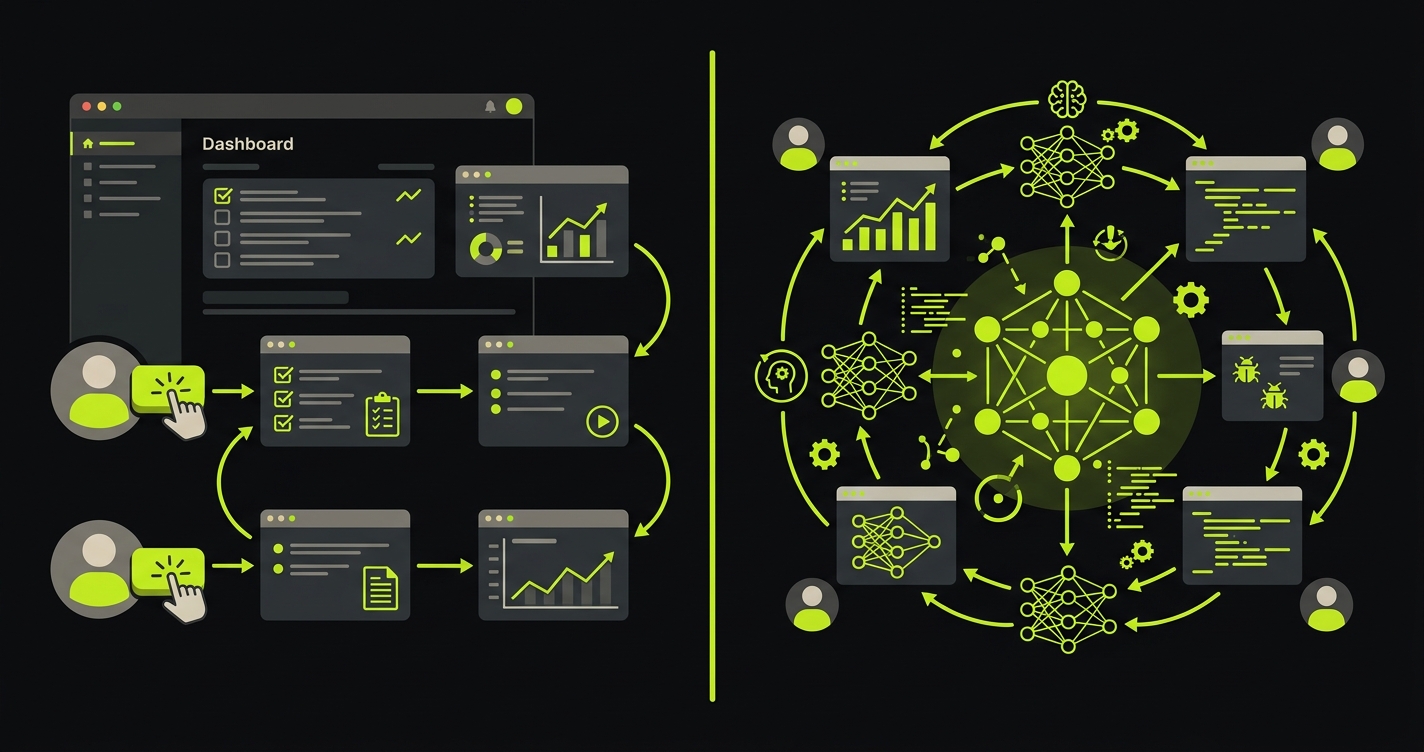
Three real limitations affect teams that rely on Qase for their full testing story, and none of them are about UI quality.
Qase Organizes Tests. It Does Not Generate or Run Them.
Qase is a test management platform. It helps you organize test cases into suites, track test runs, assign tests to team members, and generate reports. It does this well: better than most competitors, in fact. The interface is clean. The API is comprehensive. The integrations are solid.
But Qase does not create tests. It does not execute them. It does not fix them when they break. It manages the artifacts that humans produce, which means you still need engineers to write every test case, QA analysts to maintain every test suite, and automation engineers to build and debug the execution layer on top. That is by design: Qase is scoped to test case management, not test generation or execution.
This is like having the best-designed filing cabinet in the world. The drawers slide smoothly. The labels are perfectly organized. But you still have to create every document by hand, and when the filing system grows to thousands of documents, the cabinet's design elegance does not save you from the operational burden of maintaining it all.
One engineering manager told us: "Qase is beautiful software. We spent three months migrating to it from TestRail. Six months later, we still had the same problem: 400 test cases that nobody wanted to maintain, 30% of which were outdated."
If your bottleneck is writing and maintaining the E2E tests themselves, a better test management tool will not fix that. That gap is what pushes teams to look at AI-driven test generation and execution tools like Autonoma alongside (or instead of) a TCM platform.
API-First Organizes Manual Work, It Does Not Replace It
Qase's API-first architecture is genuinely developer-friendly. You can create test cases programmatically, trigger test runs from CI/CD, pull results into dashboards, and build custom workflows. For teams that want to integrate test management deeply into their development process, the API is well-designed and well-documented.
But API-first still means you are building integrations around manual test management. You are writing scripts to create test cases in Qase. You are building CI/CD pipelines to report results back to Qase. You are maintaining webhook handlers to sync Qase data with other tools. All of this integration work serves the purpose of organizing and tracking tests that humans still write and maintain.
The API makes the manual workflow more automated, but it does not remove the manual work of writing and updating tests. Most teams running Qase alongside E2E automation still need:
- Engineers to write test automation code (Cypress, Playwright, Selenium)
- A test management tool to organize those tests (Qase)
- CI/CD integrations to connect execution to management
- QA analysts to review results and update test cases
- Maintenance cycles to fix broken tests after UI changes
That is four or five layers of tooling and process. Autonoma takes a different approach to the generation and execution pieces specifically: connect your repo, and AI agents generate and run E2E tests directly from your codebase, which reduces (though does not eliminate the value of) some of that layering for teams that don't need formal test case tracking.
Cloud-Only, No Self-Hosting
Qase is a cloud-only SaaS product. There is no self-hosting option. Your test cases, test results, defect reports, and project data all live on Qase's servers. For many teams this is fine. For teams with compliance requirements (HIPAA, PCI DSS, SOC 2, FedRAMP), data sovereignty mandates, or strict security policies, cloud-only is a dealbreaker.
Even beyond compliance, cloud-only creates dependency risk. If Qase has an outage, your test management workflow stops. If Qase changes pricing, you pay more or migrate. If Qase shuts down or gets acquired, your test management data is at risk. These are not hypothetical concerns: the testing tool market has seen multiple acquisitions and shutdowns in recent years.
Qase also does not provide source code access. You cannot audit how your data is stored, how the application handles authentication, or what security practices are in place. You trust their security posture because they tell you it is good, not because you can verify it yourself.
Autonoma: A Different Category, Built for AI-Generated E2E Tests
Autonoma is an open-source, AI-native testing platform. It is not a test case management tool, and it does not try to be one. Instead, it generates and runs E2E tests directly from your codebase, so if what you're looking for is TCM, Qase, TestRail, or Zephyr Scale are the right fit; if what you actually need is AI-generated E2E tests running on real environments, that's the problem Autonoma is built to solve.
AI Generates, Executes, and Maintains E2E Tests From Your Code
Unlike Qase, where humans write, organize, and maintain test cases, Autonoma's agents handle E2E test generation, execution, and maintenance directly from your codebase.
How it works: You connect your GitHub repo, and Autonoma's Planner agent reads your routes, components, and user flows to plan test cases, including the endpoints needed to put your database in the right state for each test. The Executor agent then runs those tests against a real preview environment, driving your app's UI the way a user would. The Reviewer agent evaluates each run and classifies what it finds: a real bug, an agent error, or a test/plan mismatch. On every pull request, the Diffs Agent analyzes the code changes and updates the test suite to match, so tests stay aligned with your codebase without manual upkeep.
Tests execute using AI vision models that see your app like a human would. No CSS selectors or XPaths to break. When your UI changes, the Diffs Agent updates affected tests automatically because the pipeline reads the code, not a fixed DOM structure. Each step includes verification layers to ensure consistent, reliable behavior.
This does not replace what Qase does. It replaces the manual work of writing and updating E2E test scripts:
- Qase: Humans write test cases, Qase organizes and tracks them, separate tools execute them, humans fix them when they break.
- Autonoma: Planner and Diffs Agent generate and maintain E2E tests from your code, Executor runs them on a live preview environment, Reviewer classifies the results.
Some teams keep Qase for test case documentation and stakeholder reporting while Autonoma handles the E2E generation and execution layer. Others skip formal test case management entirely and rely on Autonoma's test plans and run history instead. Either way, your team spends less time hand-writing test scripts and more time reviewing outcomes.
Open Source and Self-Hosting
Full source code on GitHub. Licensed under BSL 1.1 (converts to Apache 2.0 in 2028). You can use it in production, inspect every line, audit security, and self-host with no feature restrictions. The only limitation: you cannot resell Autonoma's functionality as a commercial service.
Run Autonoma on your infrastructure. AWS (ECS, EKS, or EC2), GCP (GKE or Compute Engine), Azure (AKS or VMs), or your own data center. When you self-host, your data never leaves your infrastructure. Test plans, execution results, and application data stay in your VPC.
The technology stack is built on standard open source components: TypeScript and Node.js 24 for the runtime, Playwright for web testing, Appium for mobile testing, PostgreSQL for data storage, and Kubernetes for orchestration. No proprietary runtimes, no vendor-specific dependencies.
This directly addresses Qase's cloud-only limitation. Need compliance-friendly testing? Self-host and audit the source code. Need data sovereignty? Keep everything on your infrastructure. Need to customize behavior? Fork and modify.
Unlimited Parallel Execution
Every plan (free tier, cloud, and self-hosted) supports unlimited parallel execution. Qase does not execute tests itself; it manages test cases, so parallelism depends on whatever execution tool you layer on top. With Autonoma, execution is built in and scales with your infrastructure. Add more tests, spawn more instances. No separate execution platform needed.
Cross-Platform Coverage
Autonoma uses Playwright for web testing (Chrome, Firefox, Safari) and Appium for mobile testing (iOS and Android), with real browser and device automation. It is framework agnostic: React, Next.js, Vue, Angular, Flutter, React Native: the AI reads your codebase structure regardless of framework.
Qase vs Autonoma: Where They're Actually Comparable
Qase and Autonoma sit in different categories, test case management versus AI-generated E2E testing, so a row-by-row "which is better" comparison would be misleading on most dimensions. The table below sticks to the areas where a genuine comparison holds: AI capability, test generation and execution, maintenance, codebase integration, and openness.
| Dimension | Qase | Autonoma |
|---|---|---|
| AI Capabilities | None: no AI test generation or execution | Planner, Executor, Reviewer, and Diffs Agent handle generation, execution, review, and maintenance |
| Test Generation | Not applicable: humans write test cases manually | AI generates E2E tests directly from your codebase |
| Test Execution | Not applicable: requires a separate execution tool | Built-in execution against real preview environments with Playwright and Appium |
| Test Maintenance | Manual: humans update test cases when the app changes | Diffs Agent updates affected tests automatically on every PR |
| Codebase Integration | Test cases are written and stored independently of code | Tests are generated from and stay linked to the actual codebase |
| Open Source | Proprietary closed source | BSL 1.1 on GitHub (Apache 2.0 in 2028) |
| Self-Hosting | Cloud only, no self-hosting | Self-host anywhere (AWS, GCP, Azure, on-prem) |
For test case management, tracking, and reporting, that's Qase's core job and this table doesn't cover it. Some teams run both: Qase for test case documentation, Autonoma for AI-generated E2E test execution.
Cost: What Each Layer Actually Costs
Qase's pricing looks reasonable at first glance. Free for up to 3 users. $24/user/month on the Plus plan. $36/user/month on the Enterprise plan. For a 10-person team, that is $2,880-4,320 per year for test case management.
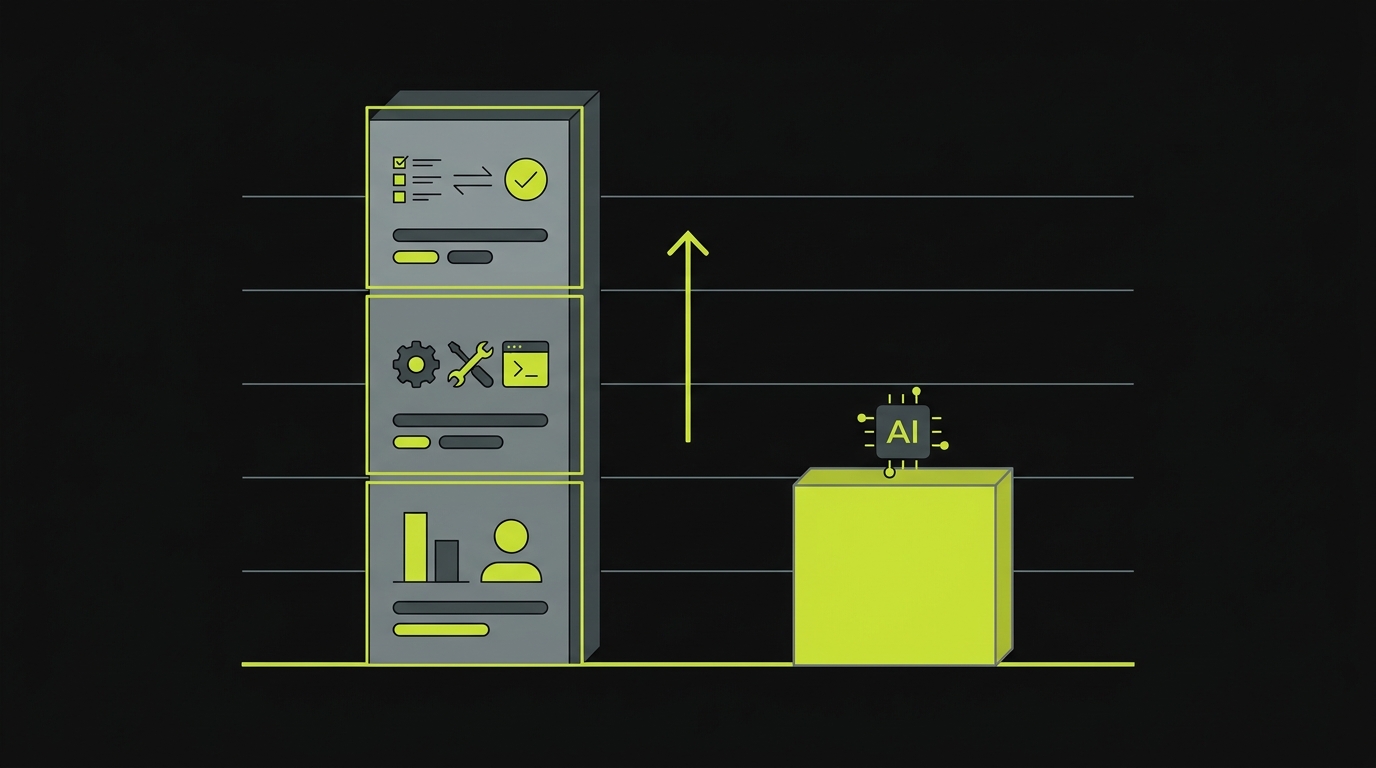
That price covers management, tracking, and reporting. It does not cover writing or running the tests themselves. Most teams pairing Qase with E2E automation also carry:
- Test automation engineers to write and maintain automated tests ($80K-150K/year salary)
- Execution infrastructure like BrowserStack, Sauce Labs, or self-managed Selenium Grid ($2,000-5,000/year)
- CI/CD integration time to connect Qase with execution tools (engineering hours)
- Maintenance cycles to update test cases and automation code when features change (10-20 hours/month)
For a mid-sized team (10-15 people, 500+ test cases) running Qase alongside manual E2E automation, that full stack typically runs $40K-80K per year including the management tool, execution infrastructure, and engineering time.
If your team's bottleneck is specifically the generation-and-execution layer rather than test case tracking, Autonoma is priced for that layer on its own:
- Cloud ($499/month): $6K/year. AI handles generation, execution, and maintenance. No separate execution platform. No manual test maintenance engineering time.
- Self-hosted (free platform): Infrastructure costs only, typically $200-400/month ($2,400-4,800/year). Full control over data and scaling.
That is not an apples-to-apples swap for a Qase subscription; it is the cost of a different layer of the testing stack. Some teams run both and reduce spend on automation engineers and execution infrastructure instead of dropping Qase.
Using Autonoma Alongside (or Instead Of) Manual E2E Workflows
If your team already relies on Qase for test case tracking, you don't need to give that up to adopt Autonoma; the two operate at different layers.
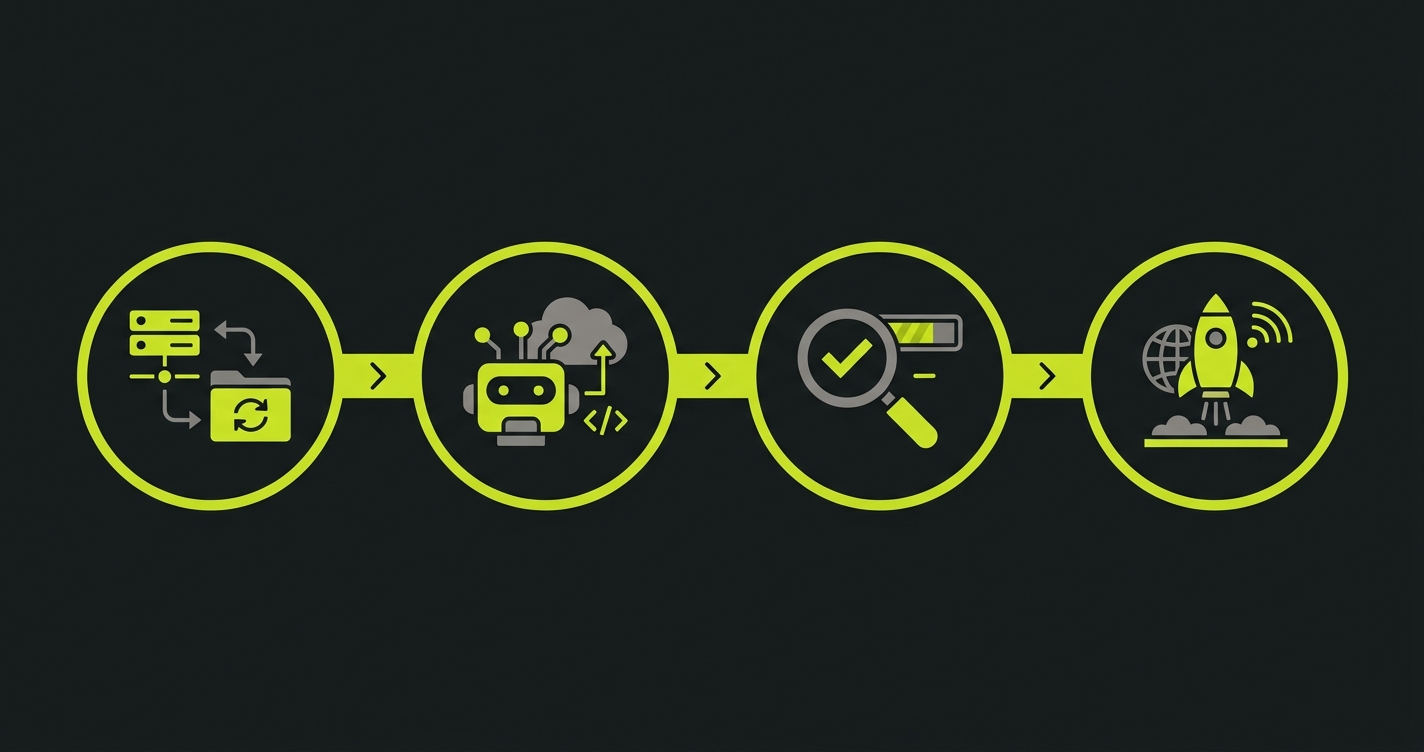
1. Connect your repo. Sign up for the free tier at getautonoma.com or self-host by cloning the GitHub repo and following the deployment docs. Connect your GitHub repository and let the Planner agent analyze your codebase. This takes minutes.
2. AI generates tests. The Planner agent builds a knowledge base of your application and generates comprehensive E2E test cases automatically. Start with your most critical flows (authentication, checkout, core features) and compare AI-generated coverage against your existing Qase test cases. Use your Qase suite as a reference checklist, not as migration input.
3. Validate coverage. Compare AI-generated test coverage against your existing Qase test suites. The AI generates tests from your actual code, so it often catches flows and edge cases that manual test cases miss. Review the AI-generated test plans, identify any gaps, and iterate. Most teams see useful coverage within days.
4. Decide what stays manual. Point your CI/CD pipelines at Autonoma for E2E execution, and decide whether Qase continues to own test case documentation and stakeholder reporting or whether your team no longer needs a separate TCM tool. Both are reasonable outcomes depending on your compliance and reporting needs.
The key point: you are not migrating 500 test cases out of Qase into Autonoma. You are connecting your repo and letting AI generate fresh, code-aware E2E tests, which can run standalone or sit alongside whatever test case management process your team keeps.
Frequently Asked Questions
If you need test case management specifically, Qase's category, look at Qase, TestRail, or Zephyr Scale. If what you actually need is AI-generated E2E tests that run automatically, Autonoma is an open-source testing platform on GitHub with a free tier (100K credits) and full self-hosting. It is a different category from Qase: Autonoma generates and executes tests from your codebase rather than organizing test cases that humans write.
For test case management specifically, Qase does not offer self-hosting; it is cloud-only SaaS. If you are open to a different category, Autonoma is fully self-hostable with complete source code on GitHub. You can run it on your own infrastructure (AWS, GCP, Azure, on-premise) with zero feature restrictions, though it covers AI-generated E2E testing rather than test case organization.
Qase is free for up to 3 users, then $24-36/user/month on paid plans. A 10-person team pays $2,880-4,320/year for test case management. That covers organizing and tracking tests, not generating or executing them. Autonoma, which handles AI-generated E2E test execution rather than test management, offers a free tier with 100K credits, cloud at $499/month, or free self-hosting.
Qase is a test case management platform: it organizes, tracks, and reports on test cases that humans write and maintain. Autonoma is an AI-native E2E testing platform: it generates tests directly from your codebase, executes them against real preview environments using vision models, and keeps them updated as your code changes. They solve different problems. Qase organizes the artifacts your team produces; Autonoma produces and runs the tests themselves. Many teams use a TCM tool for planning and reporting alongside an execution layer like Autonoma.
Yes. You don't need to migrate anything out of Qase. Connect your repo and Autonoma's AI generates and runs E2E tests from your codebase independently. Some teams keep Qase for test case documentation and reporting while Autonoma handles automated E2E generation and execution; others use Autonoma on its own for E2E coverage and skip test case management entirely if they don't need it.
Neither, exactly. Autonoma does not manage test cases, so it is not a drop-in replacement for Qase's core function. What it does replace is the manual work of writing and maintaining E2E test scripts: Autonoma's AI generates, executes, and maintains those tests from your codebase. If your team needs formal test case tracking and reporting, that is still Qase's job or a similar TCM tool's job.
They are not directly comparable because they serve different purposes. Qase's API-first design is developer-friendly for integrating test management into workflows: creating test cases programmatically, syncing results, building dashboards. Autonoma is also API-first, but the API sits in front of AI-driven test generation and execution rather than test case organization. Which one is "better" depends on whether you need to manage test cases or generate and run E2E tests.
The Bottom Line
Qase is the best-designed test case management platform available. Clean UI, excellent API, thoughtful developer experience. If your team needs to organize, track, and report on test cases that humans write, Qase, TestRail, and Zephyr Scale are the right category to shop in.
If what you actually need is AI-generated E2E tests running against real preview environments, that's a different job. Autonoma is an open-source AI testing platform with full source code on GitHub (BSL 1.1, Apache 2.0 in 2028). The Planner and Diffs Agent generate and maintain E2E tests directly from your codebase, the Executor runs them against real preview environments, and the Reviewer classifies the results. Self-host on your infrastructure or use our cloud. Unlimited parallels on every plan. No vendor lock-in. Free tier starts at 100K credits, cloud at $499/month, self-hosted at infrastructure cost only.
Pick based on the job: test case management, or AI-generated E2E testing. Plenty of teams end up running both.
Ready to try open source testing?
Start Free - 100K credits, no credit card, 5-minute setup
View on GitHub - Inspect source code, self-host documentation
Book Demo - See AI-generated E2E testing in action
Related Reading:


