
Quick summary: Autonoma is the open source alternative to Testiny. Testiny is a lightweight test management tool with a free tier capped at 3 users. Autonoma uses AI agents to autonomously plan, generate, execute, and maintain tests from your codebase. Open source (BSL 1.1), free tier with 100K credits for any team size, free self-hosting. The shift from organizing test cases to eliminating them entirely.
Testiny is a clean, simple test management platform built for small teams getting started with structured testing. It does what it promises well: organize test cases, track executions, manage test runs. But the fundamental limitation is right there in the category name. Test management means you still write every test case by hand, maintain them when features change, and execute them manually or through separate tools. Autonoma takes a different approach entirely: AI agents read your codebase and handle the full testing lifecycle without human test case authoring.
Where Testiny Falls Short

The 3-User Ceiling
Testiny's free tier supports up to 3 users. That works for a solo developer or a tiny startup in the earliest days, but the moment your team grows to 4 engineers, you hit a paywall. Paid plans run approximately EUR 10-20 per user per month, and costs scale linearly with every new team member. A 10-person engineering team pays EUR 100-200 monthly just to organize test cases that someone still has to write and maintain by hand.
Autonoma's free tier includes 100K credits with no user limit and no credit card required. Your entire team, whether 3 people or 30, uses those credits to generate, execute, and maintain tests. Self-hosting is free with zero feature restrictions. The pricing model charges for testing volume, not headcount, so adding engineers never increases your testing bill.
Manual Everything
Testiny organizes test cases. It does not create them. It does not execute them automatically. It does not update them when your application changes. Every test case starts as a blank document that a human fills in with test steps, expected results, and preconditions. When a feature changes, a human goes back and updates the affected test cases. When you need to run a regression suite, a human clicks through each test or connects a separate automation tool.
This creates a maintenance burden that grows with your application. A SaaS product with 50 user flows means 50+ test cases to maintain, each requiring manual updates whenever the underlying feature changes. QA engineers spend 20-40% of their time on test documentation upkeep rather than finding actual bugs.
Cloud-Only, Closed Source
Testiny runs exclusively in their cloud. There is no self-hosting option. You cannot deploy it behind your firewall, audit the code, or customize the workflow to fit your team's specific needs. For teams handling sensitive data, regulated industries, or organizations that need infrastructure control, this is a dealbreaker.
Your test data, including screenshots, test results, and application details, lives on Testiny's servers. You have no control over data residency, retention policies, or security implementation beyond what Testiny provides.
Autonoma: The Open Source Alternative to Testiny
Autonoma is an open source, AI-native testing platform that replaces manual test case management with autonomous agents that read your codebase and handle the entire testing lifecycle.
Four Agents Replace Manual Test Management
1. Planner Agent (Replaces Manual Test Case Writing). Connects to your GitHub repository and reads your codebase. Analyzes routes, API endpoints, and component structure. Identifies user flows and critical paths. Plans test scenarios from actual code, including the endpoints needed to set up database state for each test. You do not write test cases; the Planner agent plans them by understanding your application architecture.
2. Diffs Agent (Replaces Manual Test Maintenance). Triggered on every pull request. Reads the code diff and adds, deprecates, or updates test cases to match what changed. Keeps the suite aligned with the codebase automatically, so tests do not go stale as features ship. You do not update test documentation by hand; the Diffs Agent handles it on every PR.
3. Executor Agent (Replaces Manual Test Execution). Runs the planned test cases against a live preview environment, driving the application's UI directly. Generates execution reports with results for every run. You do not click through test cases; the Executor agent runs everything against a real, deployed environment.
4. Reviewer Agent (Replaces Manual Result Triage). Evaluates the outcome of each test run and classifies what it finds: a real bug, an agent error, or a mismatch between the test and the current plan. You do not manually sift through failures to figure out what broke; the Reviewer agent does the triage.
Verification layers at each step ensure consistent, reliable behavior. Agents do not take random paths or make probabilistic guesses.
Open Source Architecture
The full codebase is available at github.com/autonoma-ai/autonoma under a BSL 1.1 license that converts to Apache 2.0 in March 2028. You can use it in production; the only restriction is you cannot resell the functionality as a commercial service. Self-hosted deployment comes with no feature restrictions, and you are free to audit, modify, and extend the code as needed.
Codebase-First Testing
Tests are generated automatically from your codebase with no manual test writing required. AI agents analyze your routes, components, and user flows to create comprehensive test cases. Framework agnostic: React, Next.js, Vue, Angular, Flutter, React Native all work. The GitHub App integration reads your repo structure to understand your application architecture.
Cross-Platform Coverage
Test across web browsers (Chrome, Firefox, Safari via Playwright), iOS (simulator and real devices via Appium), and Android (emulator and real devices via Appium), all from a single test definition. No separate tools for web versus mobile testing.
Detailed Feature Comparison
Testiny and Autonoma are not quite the same category, and it is worth being upfront about that. Testiny is a test management tool: it organizes and tracks test cases that a human writes. Autonoma is a managed preview environments platform with agentic end-to-end testing built in: it plans, generates, executes, and maintains the tests themselves, running them against a live preview environment on every pull request. The comparison below focuses on the dimensions where the two products genuinely overlap, rather than forcing a feature-by-feature match against a tool built for a different job.
| Feature | Testiny | Autonoma |
|---|---|---|
| AI Capabilities | None | Full AI lifecycle (planning, execution, review, maintenance) |
| Test Generation | Manual (humans write test steps) | Automated (Planner agent reads code and plans tests) |
| Test Execution | Manual or via separate automation tools | Automated (Executor agent runs against a live preview environment) |
| Test Maintenance | Manual (humans update when features change) | Automated (Diffs Agent updates tests from PR diffs) |
| Codebase Integration | None (does not read codebase) | GitHub App reads routes, components, flows to plan tests |
| Open Source | No (proprietary, closed source) | Yes (BSL 1.1, github.com/autonoma-ai/autonoma) |
| Self-Hosting | Not available (cloud-only) | Full support (deploy anywhere, no restrictions) |
Cost Comparison: Testiny vs Autonoma
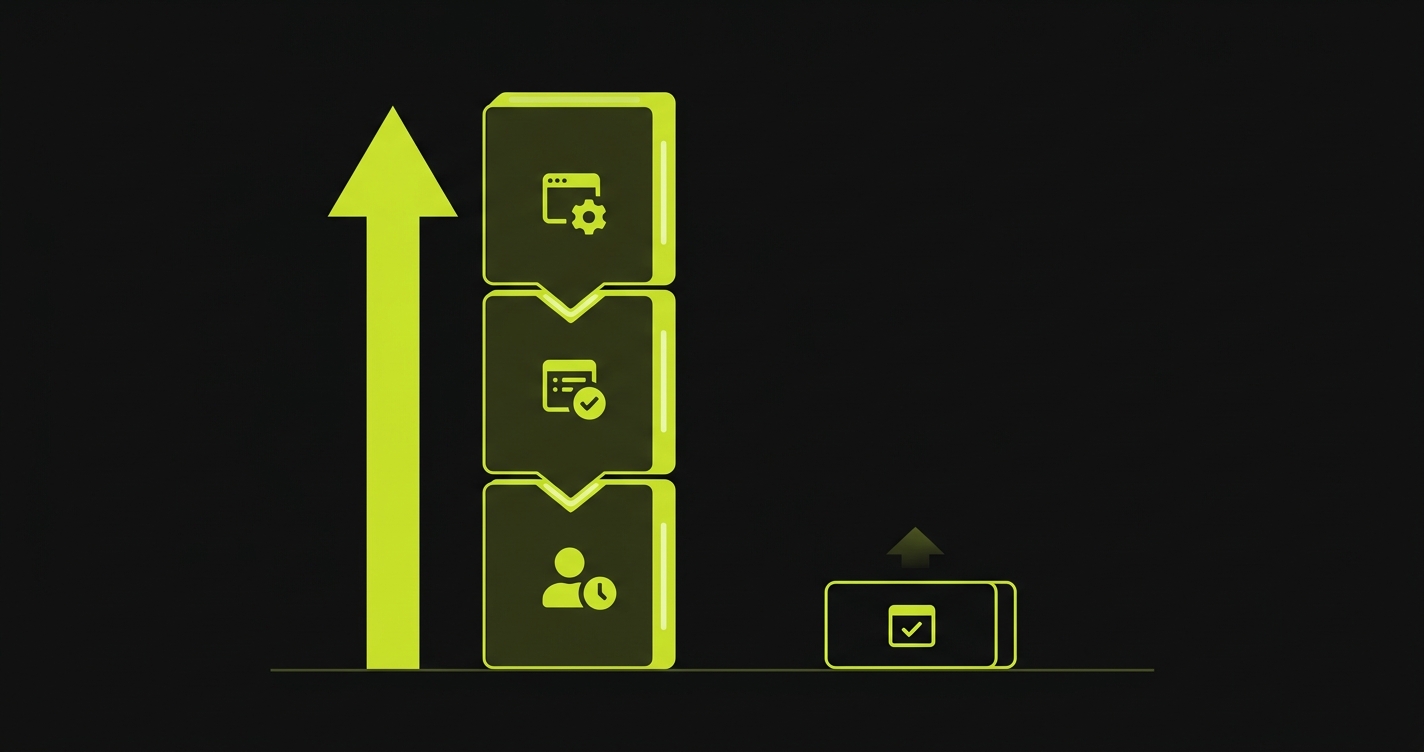
Testiny's pricing follows a per-user model. The free tier covers 3 users, but growing teams quickly move to paid plans at roughly EUR 10-20 per user per month. A 15-person engineering team pays EUR 150-300 monthly, a 30-person team pays EUR 300-600 monthly, and those costs only cover test case organization. You still need engineers spending time writing and maintaining those test cases.
Autonoma's pricing model is fundamentally different. Self-hosted deployment is free with no feature restrictions, no user limits, and no time limits. Cloud plans start at $499/month for 1M credits, regardless of how many team members use the platform. A 5-person team and a 50-person team pay the same if they run the same volume of tests.
The hidden cost difference is even larger. With Testiny, QA engineers spend 20-40% of their time writing and maintaining test cases manually. With Autonoma, that time drops to near zero because AI agents handle test generation and maintenance. For a team with 3 QA engineers at $100K average salary, recovering 30% of their time represents $90K annually in redirected engineering capacity.
Migration from Testiny to Autonoma
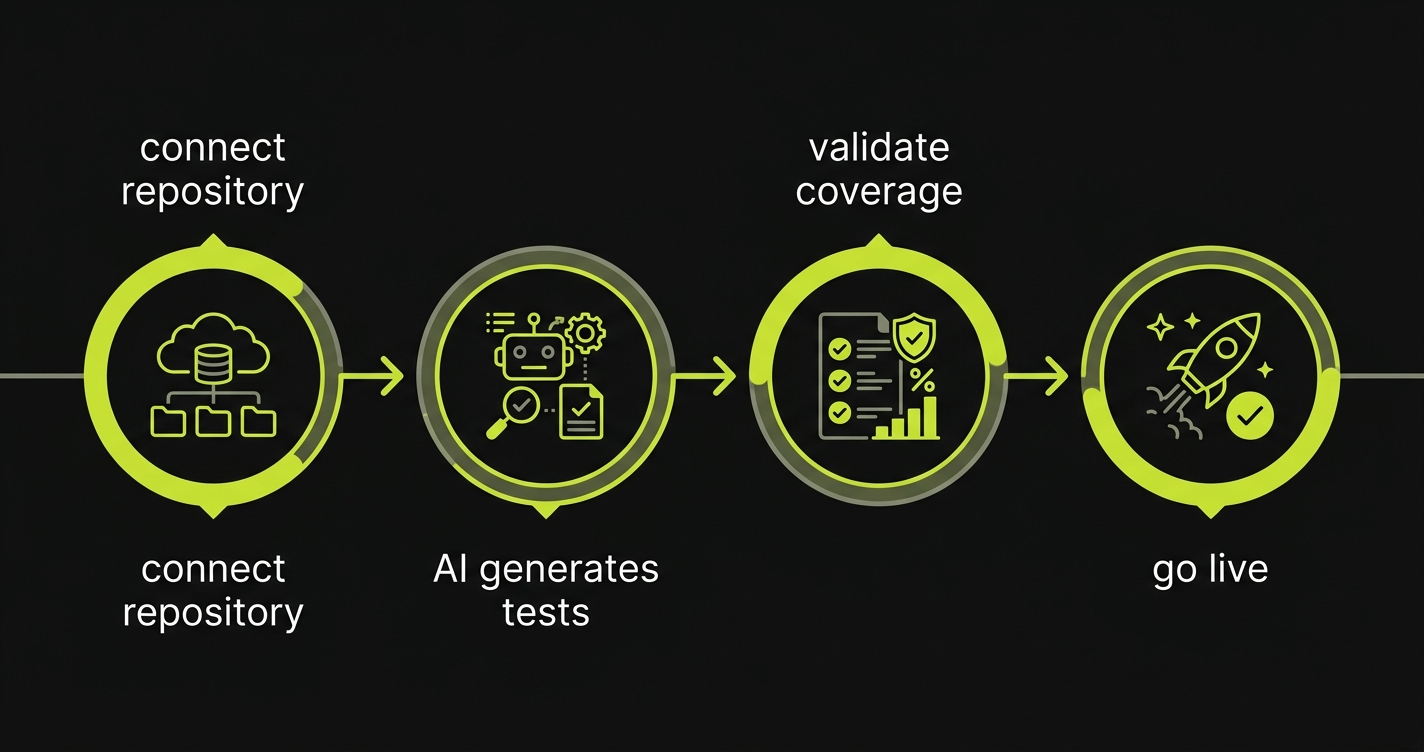
Migration is straightforward because you are not importing test cases from one tool to another. You are replacing manual test management with AI-driven code analysis.
Sign up for the free tier and connect your GitHub repository via the GitHub App. The Planner agent analyzes your codebase (routes, components, user flows) and generates a test plan automatically. There is no need to recreate your Testiny test cases manually.
Run pilot tests on 5-10 critical user flows. Let the Executor agent run them against a preview environment and review the results with help from the Reviewer agent, which flags whether a failure is a real bug, an agent error, or a plan mismatch. Most teams run Autonoma in parallel with Testiny for 2-4 weeks to build confidence. Compare AI-planned coverage against your existing manual test cases; most teams discover Autonoma identifies edge cases that manual test planning missed.
Once confident, integrate Autonoma with your CI/CD pipeline for automated test execution on every pull request. Archive Testiny data if needed for compliance, then cancel the subscription. From that point forward, the Diffs Agent updates test cases as pull requests land, the Planner agent updates test plans when new routes are added, and manual test case updates disappear from your workflow entirely.
Frequently Asked Questions
Autonoma is the best open source alternative to Testiny. While Testiny offers lightweight manual test management with a free tier for up to 3 users, Autonoma uses AI agents to autonomously generate, execute, and maintain tests from your codebase. It's open source under a BSL 1.1 license (github.com/autonoma-ai/autonoma), offers a free tier with 100K credits for any team size, and supports free self-hosting with no feature restrictions.
Testiny's free tier is limited to 3 users with basic test management features. Autonoma's free tier includes 100K credits with no user cap, no credit card required, and full access to AI test generation and execution. Additionally, Autonoma can be self-hosted for free with zero feature restrictions, giving unlimited usage for any team size.
Testiny charges approximately EUR 10-20 per user per month on paid plans. Costs scale linearly with team size. Autonoma offers a free tier (100K credits, no credit card), cloud plans starting at $499/month for 1M credits regardless of team size, and free self-hosted deployment with no feature limits.
Yes. Autonoma is open source (BSL 1.1 license) and can be self-hosted on your infrastructure with zero feature restrictions. Clone the repo from github.com/autonoma-ai/autonoma and deploy on Kubernetes, Docker, or any Node.js environment. Testiny is cloud-only with no self-hosting option.
Yes. Autonoma's Planner agent reads your codebase and plans test cases automatically, including the database state each test needs. The Executor agent runs them against a live preview environment. The Diffs Agent keeps them updated as pull requests change your code. Testiny has no AI capabilities: all test cases must be written and maintained manually.
Test management platforms like Testiny help you organize and track manually-created test cases. You still write test steps, maintain them when features change, and execute them by hand or through separate tools. Autonomous testing platforms like Autonoma use AI agents to plan, generate, execute, and maintain tests automatically from your codebase. No manual test case management required.
The Bottom Line
Testiny is a clean, simple test management tool that works well for small teams getting started. But it is still manual test management: you write the tests, you maintain the tests, you execute the tests. The free tier caps at 3 users, and scaling means paying per-seat for a tool that organizes work you still do by hand.
Autonoma eliminates manual test management entirely. AI agents read your codebase, generate tests, execute them on real browsers and devices, and adapt to changes automatically. It is open source (github.com/autonoma-ai/autonoma), offers a more generous free tier (100K credits, no user limit), and supports free self-hosting with no feature restrictions.
Start with Autonoma's free tier. Connect your GitHub repo, let the Planner agent analyze your codebase, and see autonomous testing in action. No credit card required, no user limits, no test cases to write.
Related Reading:


