

In 2026, the complexity of global SaaS applications has reached a point where traditional quality assurance is no longer viable. Distributed systems require a distributed approach to integrity. This article explores the concept of 'SaaS Integrity Global,' where agentic quality floors are deployed across multi-region infrastructure to ensure that applications remain reliable, consistent, and performant at scale. By moving beyond centralized testing and toward autonomous, protocol-level validation, companies can maintain the integrity of their entire global footprint with minimal human intervention.
The challenge for SaaS companies in 2026 is one of scale and distribution. We have moved far beyond the single-region deployments of the past. Today's applications are distributed across hundreds of edge locations and multi- environments. The complexity of these systems is staggering, and the risk of a regional failure cascading into a global outage is ever-present.

The traditional approach to quality assurance was centralized. We ran our tests in a single CI/CD environment and assumed that if they passed, the application would work everywhere. But we soon realized that regional differences in infrastructure, latency, and service availability were a constant source of unpredictable failures. We wanted global consistency, but we were still relying on localized validation.
The new paradigm is SaaS Integrity Global. This is a distributed system of agents that live alongside your application in every region, ensuring that the integrity of the SaaS is maintained regardless of where the user is located.
The Problem with Centralized Testing
Centralized testing is a legacy of an era when infrastructure was simpler. It relies on a single source of truth for the application's behavior, which is usually a staging environment that mirrors the primary production region. But a staging environment in US-East-1 can't tell you how your application will behave in AWS Mumbai or at an edge location in Berlin.
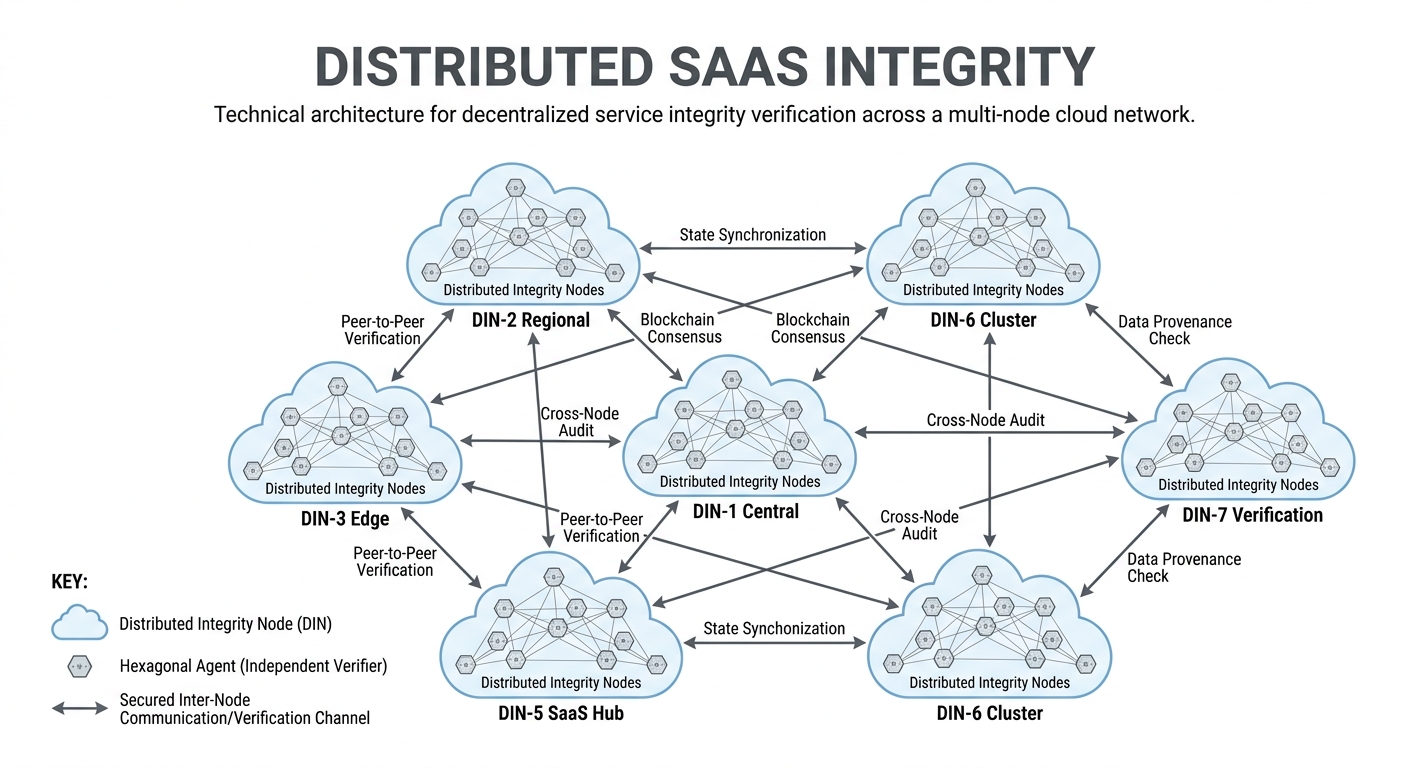
This centralized model is why we see so many 'ghost regressions' in global SaaS applications. These are bugs that only appear in specific regions or under specific network conditions. They are nearly impossible to catch in a centralized CI/CD pipeline and often result in degraded performance or localized outages that go unnoticed for hours.
In a SaaS Integrity Global architecture, powered by Autonoma, the Planner Agent creates a global validation strategy that account for regional variations. It analyzes the infrastructure manifests and the application code to identify potential points of failure in each region.
Because the Planner understands the global footprint of the application, it can tailor the validations to the specific needs of each region.
Distributed Agentic Validation
The heart of the SaaS Integrity Global model is the deployment of Executioner Agents across every region. These agents don't just run tests; they actively monitor and verify the behavior of the application in its local context.
When a change is deployed, the Executioner Agents in each region execute a series of protocol-level validations that ensure the new code is behaving as expected within the local infrastructure. They verify that database connections are stable, that latency is within acceptable limits, and that all third-party dependencies are available and performing correctly.
This distributed approach allows companies to catch regional issues before they impact users. It provides a level of observability and validation that is impossible with centralized testing.
The Self-Healing Global Mesh
Maintaining a global SaaS application means dealing with a constant stream of regional incidents. A network glitch in one part of the world, a service outage in another—these are the daily realities of distributed systems. In a SaaS Integrity Global architecture, the Maintainer Agent manages these incidents autonomously.
When a regional validation fails, the Maintainer analyzed the failure to determine if it is a code regression or an infrastructure issue. If it is an infrastructure issue, the Maintainer can automatically trigger a failover or a traffic rerouting to maintain the integrity of the service for users in that region. If it is a code regression, the Maintainer provides the necessary analysis to resolve the issue quickly.
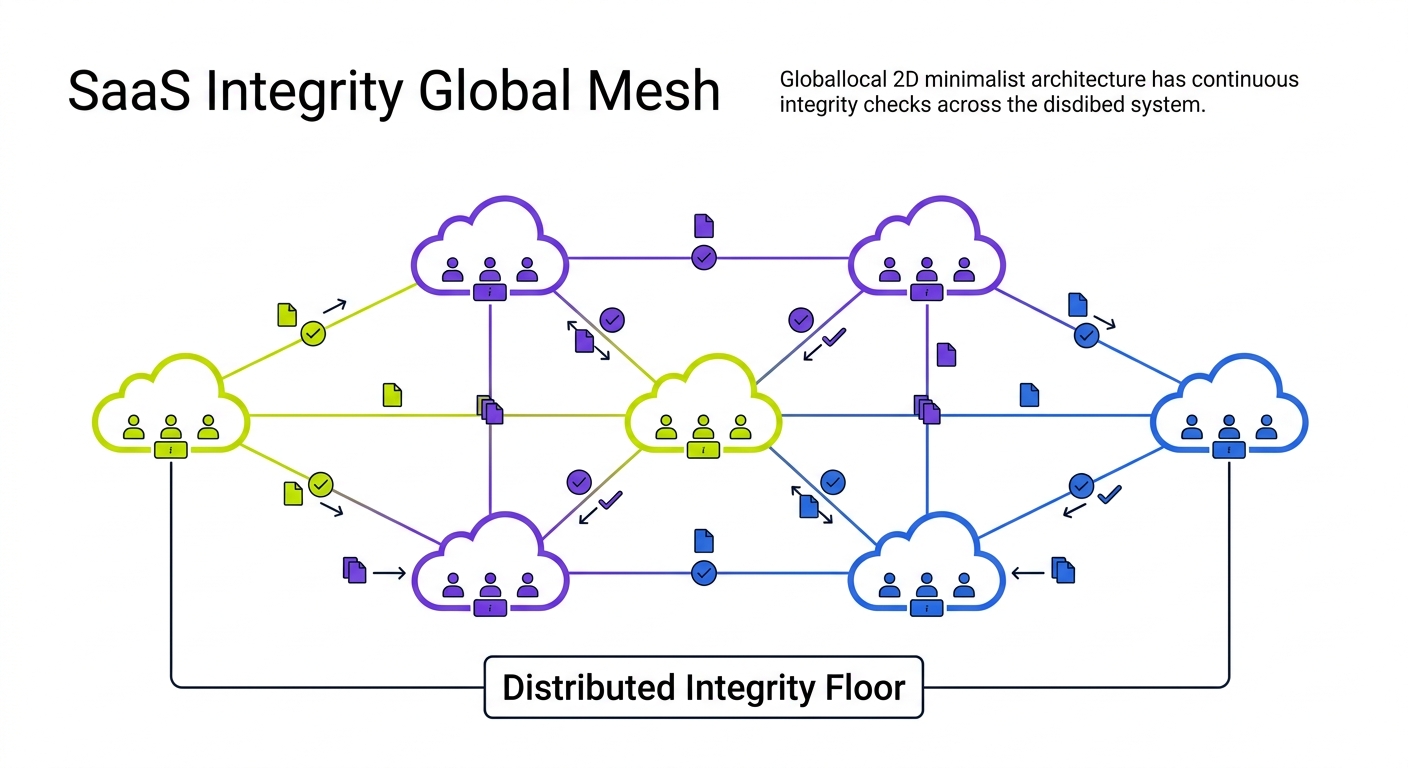
This self-healing mesh transforms global infrastructure from a source of anxiety into a source of resilience. The agents handle the complexity of managing a distributed system, allowing human engineers to focus on higher-level tasks.
Data Sovereignty and SaaS Integrity
In 2026, data sovereignty is a critical requirement for global SaaS applications. Companies must ensure that user data remains within specific geographical boundaries to comply with local regulations. Maintaining this integrity across a global footprint is incredibly complex.
The agentic quality floor simplifies this by incorporating sovereignty checks into the validation process. The Planner Agent, understanding the regulatory requirements from the codebase and the infrastructure configuration, ensures that the Executioner Agents verify data residency in every region.
This automated verification ensures that companies remain compliant with global regulations without the need for manual audits or complex, hard-coded checks.
The Narrative Shift: From Local to Global
The transition to SaaS Integrity Global represents a fundamental shift in how we think about quality. For years, we focused on localized quality—ensuring that the code worked in our primary environment. But we soon realized that global integrity is about more than just code; it's about the consistency and resilience of the entire system across every region.
The 2026 standard is built on the concept of a global quality floor. We want to serve a global audience, but we need to ensure they have a consistent experience. We must deploy an agentic layer that provides a persistent floor of validation in every region. We want to leverage multi- and edge infrastructure, but we need to manage the complexity. We use Autonoma to provide a unified layer of integrity across our entire global footprint.
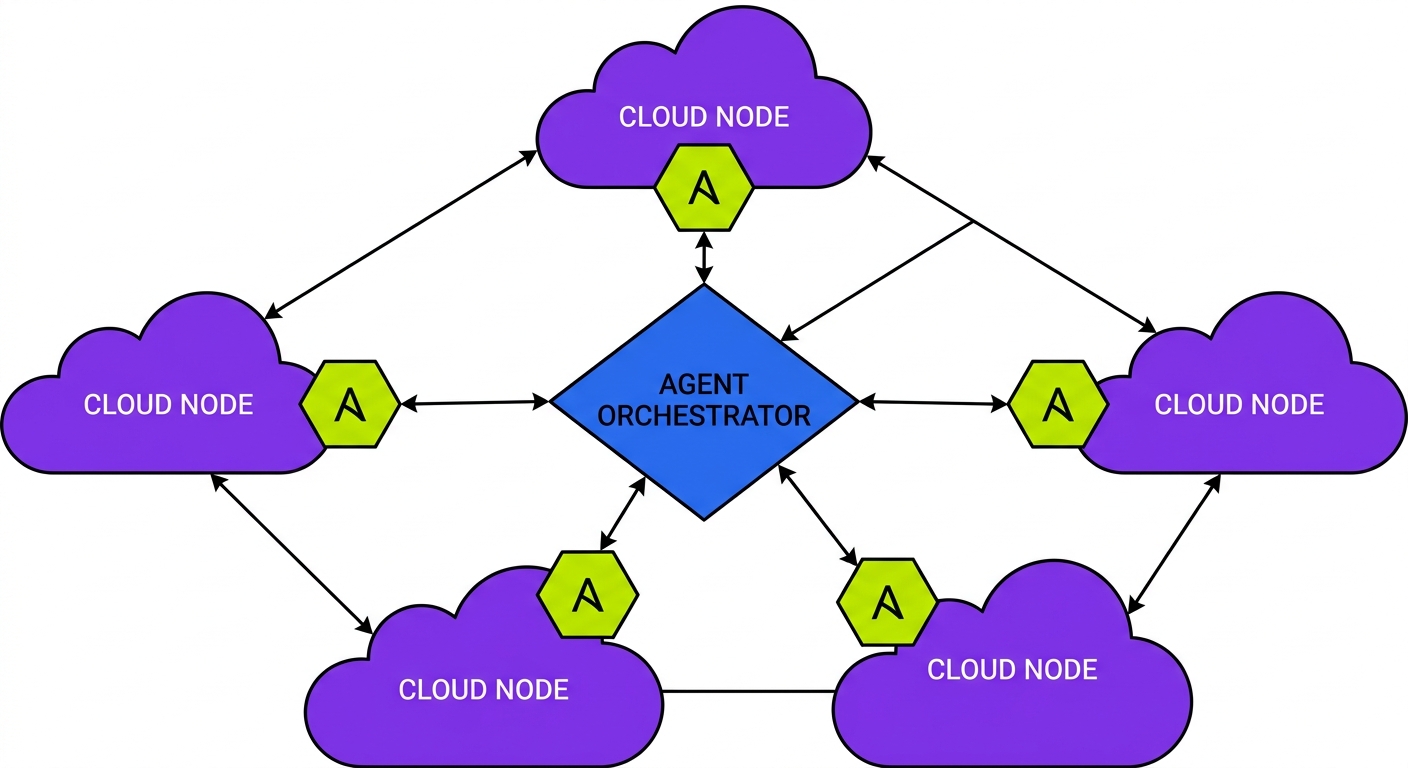
This shift in perspective transforms global infrastructure from a challenge into an asset. When you have a solid global floor, you can expand with confidence. When that floor is codebase-first, it scales as you grow.
Implementing SaaS Integrity Global
Implementing a SaaS Integrity Global architecture involves several key steps.
First, you must adopt a multi-region infrastructure strategy. This means designing your application to be distributed from the ground up, with clear boundaries between regional and global state.
Second, you need to deploy your agents as a global mesh. The agents must be able to communicate with each other across regions to coordinate validation and failover logic.
Third, you must integrate your agents with your traffic management and infrastructure orchestration systems. This allows the agents to take action to maintain integrity in the face of regional failures.
The implementation process usually starts with a single additional region to test the distributed validation logic. Once confidence is built, the agentic mesh can be expanded to the entire global footprint.
The Economic Impact of Global Integrity
The traditional approach to maintaining a global SaaS was incredibly expensive: more regions required more infrastructure, more monitoring, and more SREs to manage the complexity. The cost of global integrity scaled exponentially with the number of regions.
In the agentic model, the cost curve is linear. The agents are a part of the regional infrastructure. Whether you are in two regions or two hundred, the agentic floor provides the same level of integrity. The marginal cost of maintaining quality in a new region is essentially zero.
This decoupling of cost and distribution allows startups to compete on a global scale from day one. It eliminates the 'global tax' that has traditionally limited the expansion of growing companies.
For the modern SaaS company, SaaS Integrity Global is not just a technical strategy; it's a growth strategy. It allows you to enter new markets with confidence and provide a superior experience to your users, no matter where they are.
Conclusion: The New Global Standard
SaaS Integrity Global is the new standard for distributed systems in 2026. By deploying an agentic quality floor across your entire global infrastructure, you ensure that your application remains reliable, consistent, and performant at any scale.
The agentic revolution has fundamentally changed the nature of global SaaS delivery. We no longer struggle with regional failures and ghost regressions; we resolve them autonomously. The bottleneck of centralized testing has been eliminated, and the era of global integrity is finally a reality.
The floor is solid. The mesh is active. The integrity of your global SaaS is absolute.
Yes. The Maintainer agent can integrate with your traffic management systems to reroute traffic in the event of a regional failure, ensuring zero downtime for users.
No. Startups that want to serve a global audience from the beginning benefit the most from a distributed agentic floor, as it allows them to maintain a global footprint with minimal overhead.


