

What makes a startup POC succeed or fail? Not the breadth of features you demo: the reliability of three specific moments: getting in (auth and access), doing the core thing, and trusting the output. Most early-stage teams ship bugs into pilots constantly, but the bugs that kill deals are not random. They hit at predictable points in the customer journey. Protect those points before every deployment and you convert pilots into contracts. Let them break and you convert pilots into "we'll revisit next quarter."
You have a pilot running. The customer knows the product is early. You told them that. They said it was fine. You've got bugs on the roadmap and features half-built, and you've mentally accounted for all of it under the generous label of "beta." This is rational. This is also how deals die quietly.
Your customer agreed to a pilot because they have a real problem and they're hoping you solve it. They are not evaluating your roadmap. They're evaluating whether this thing does what you said it does, right now, under the conditions of their actual workday. The beta label lives entirely in your head. To them, this is the product.
Therefore, the question is not how polished your product is across all its surfaces. The question is which specific moments your pilot customer will hit, which of those moments cannot fail, and whether you've made sure they won't.
Why the Beta Mindset Is Commercially Dangerous
Most first-time founders carry a version of the same mental model: customers who sign up for pilots understand they're getting something early. Reasonable people tolerate bugs in early-stage software. A good relationship and clear communication can carry you through a rough patch.
This model is not wrong. It is incomplete.
The bar for "tolerable" is lower than founders typically estimate. A customer does not need to experience many failures to change their assessment of your product. What Baymard Institute's research on checkout abandonment shows for consumer products holds in B2B pilots too: a single critical failure at the wrong moment reframes everything. Not because your champion becomes unreasonable, but because they now have to explain to someone else why the tool they advocated for didn't work during the evaluation period.
That explanation is a tax on your champion's political capital. Every time they have to pay it, they become a weaker advocate for you inside their organization. You can only ask someone to spend that capital so many times before they stop spending it.
The more consequential problem is the narrative effect. Pilot decisions are rarely made by the person running the pilot alone. They make a recommendation to someone. That recommendation is shaped not by a comprehensive list of feature capabilities, but by a handful of memorable moments. A moment where your product demonstrably failed to do what was promised is the kind of thing that sticks in a recommendation, even if everything else was good.
You might have 25 bugs in your product right now. 24 of them will never surface during a typical pilot. One will. That one will have an outsized effect on the outcome.
What Happens During a Startup POC, Actually
Before you can protect a pilot, you need an honest picture of what the customer actually does during one. Most founders overestimate this significantly.
A typical B2B SaaS pilot, run by an evaluator who is also doing their regular job, looks like this: an onboarding session with you on the call (15-30 minutes), followed by three to five independent sessions where they try to accomplish something specific, a mid-point check-in, and a decision meeting. That is the entirety of the pilot, for most products, for most customers.
They are not exploring your settings panel. They are not reading your documentation on edge cases. They are not stress-testing your data import with corner cases. They are doing the thing your product is supposed to make possible, a few times, and forming a view.
The bugs that kill deals are not obscure. They are the bugs that happen to live on this narrow path: the core flow, run by a non-technical evaluator, without you present.
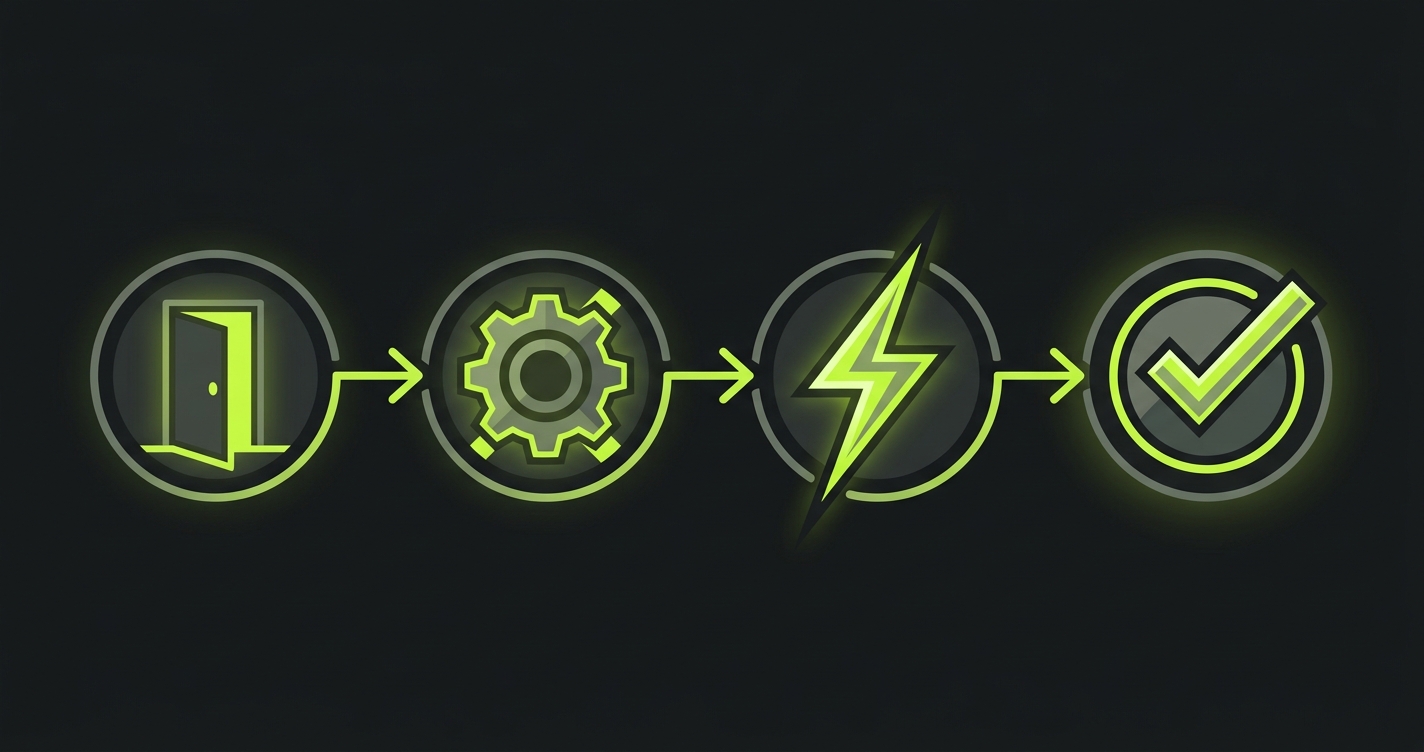
The 3 Moments in a Startup POC That Cannot Fail
Based on what we see from early-stage teams deploying to pilot customers, there are three moments where a failure is typically deal-ending. Every other moment is recoverable with good communication and a fast fix. These three are not.
Getting in. Authentication, access setup, team invites, and SSO integrations are where pilots die before they start. This sounds too obvious to mention, but it is consistently the most common source of "we tried it and couldn't get it working" pass decisions. SSO integrations fail in edge cases your staging environment never tested. Password reset flows have states that only appear when a real user, on a real email domain, on a device you didn't anticipate, hits them. Invite links expire. Permissions grant incorrectly. The customer's IT policy blocks your redirect URI.
None of these are catastrophic engineering problems. All of them, hitting during the first ten minutes of a pilot, are catastrophic sales problems.
The first time they do the core thing. Every product has one action that is the point. For a testing platform, it is running the first test and seeing results. For a data integration tool, it is connecting a source and seeing data flow. For a document processing system, it is uploading the first document and getting the output. This is the moment your customer decides whether your value proposition is real.
A bug here does not just delay the sale. It calls the premise into question. "Their core feature was broken during our pilot" is a very different failure mode than "it was rough around the edges." One is forgivable. The other generates skepticism that is hard to reverse.
The quality of the output. If your product generates an output, a report, a recommendation, an analysis, a test result. The output has to be correct. Not perfect. Correct. A wrong number in a report is worse than a missing feature. A missing feature gets you "not quite there yet." A wrong number gets you "we can't trust this."
Everything outside these three moments is secondary during a pilot. Your secondary features can be rough. Your onboarding documentation can be sparse. Your admin panel can have cosmetic issues. None of that matters in the same way. Focus your reliability investment on the path your pilot customer actually walks.
Building a Pilot-Safe Release Process
The insight above is only useful if it changes what you do before a deployment reaches a pilot customer. Here is the simplest version of a pilot-safe process:
Before every deployment that a pilot customer will receive, verify three things: a new user can sign up or log in without friction, they can do the core action in under five minutes, and the output of that action is correct.
If you can answer yes to all three with confidence, ship. If you cannot, either fix the issue first or deploy a rollback.
"With confidence" is the operative phrase. Most teams run this checklist mentally, which means they run it optimistically. Engineers who just wrote the code are not the best judges of whether it works correctly. They know how it's supposed to work, which makes it hard to see how it actually works. Automated tests on these specific paths remove the optimism. A test passes or it fails. There is no "I think it should be fine."
// Example: Playwright test covering the critical path for a pilot customer
// Run this before every deployment that reaches pilot customers

test('pilot critical path: signup → core action → output', async ({ page }) => {
  // 1. Getting in
  await page.goto('/signup')
  await page.fill('[data-testid="email"]', 'pilot-test@company.com')
  await page.fill('[data-testid="password"]', 'TestPassword123!')
  await page.click('[data-testid="signup-submit"]')
  await page.waitForURL('/onboarding')

  // 2. Core action (example: running a scan)
  await page.click('[data-testid="run-scan"]')
  await page.waitForSelector('[data-testid="scan-results"]', { timeout: 30000 })

  // 3. Output integrity
  const results = await page.locator('[data-testid="scan-results"]').textContent()
  expect(results).not.toContain('Error')
  expect(results).not.toContain('undefined')
  expect(results).toMatch(/\d+ issues? found/)
})
This is not a comprehensive test suite. It is three assertions: can they get in, can they do the thing, is the output coherent. It takes minutes to write and catches the class of bugs that kill pilots.
For teams shipping frequently, this test running on every pull request is the difference between discovering a broken authentication flow during CI and discovering it when your champion sends you a confused Slack message at 9 AM.
If writing and maintaining test scripts is not where you want to spend your engineering time, Autonoma generates and runs critical path coverage from your codebase automatically. You define what the critical path is; the platform covers it before every deploy without requiring test maintenance as your product evolves.
What Happens When Something Breaks Anyway
Even with a rigorous pilot-safe process, something will eventually break. The variable that determines whether it costs you the deal is not whether the bug happened. It is who finds it first.
An automated check that catches a broken login flow at 11 PM gives you until morning to fix it before your customer's first session. An alert when your core action starts returning errors gives you a four-hour window to send a proactive message: "We noticed an issue this morning with [specific flow]. We've deployed a fix. Let us know if you're seeing anything unusual." That message, sent before a complaint, reads completely differently than the same message sent in response to one.
The first version means you're on top of it. The second means you weren't watching.
Founders consistently underestimate how much a proactive "we caught and fixed it" communication protects the relationship. It signals operational maturity, not just technical ability. Your champion can walk into their internal decision meeting and say this team runs a tight ship, they caught an issue before we even saw it. That is a qualitatively different conversation than "we noticed it broke twice last week."
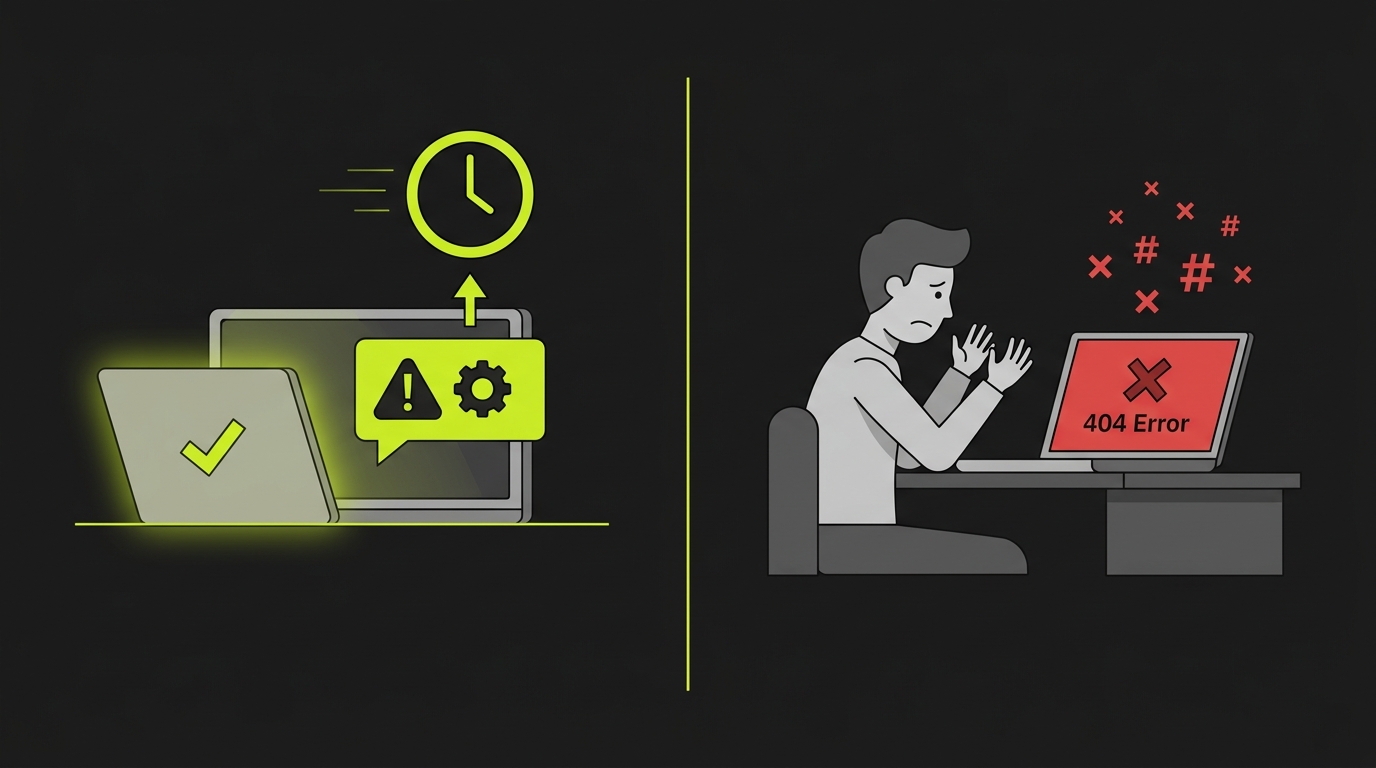
The Pilot Conversation You Never Want to Have
There is a version of a check-in call that every pre-Series A founder learns to recognize. Your champion says: "We tried to [do the core thing] a couple times last week and it wasn't quite working. We were going to reach out but got pulled into other things."
You look at your deployment log and see it. A release three days ago broke that exact flow. You fixed it the next morning when someone on your team noticed it in staging, but by then two of your champion's independent sessions had already hit it.
That conversation is winnable, barely. You explain what happened, you demonstrate the fix, you get back on track. But you have now spent political capital that did not need to be spent. Your champion had to explain to their team why the tool they were evaluating wasn't working. The deal is now a harder sell.
The version where you catch it first is a different conversation entirely. Same bug, same deploy, same fix. The only difference is you found it at 3 AM during a monitoring run instead of in a Slack message from your champion the next afternoon.
The operational investment required to get there is not large. A handful of tests on the critical path, running before every deployment. An alert that fires when they fail. An on-call rotation, even if it's just the founders, that checks the alert before pilot customer sessions begin. That infrastructure is lightweight. Its effect on deal outcomes is not.
Scaling POC Quality as You Add Pilots
The pilot-safe process described above is manageable when you have one pilot running. You can monitor manually, respond quickly, and be generally hands-on with the relationship. When you have three or four pilots running simultaneously, which is the situation YC companies often find themselves in during the six weeks before Demo Day. Manual monitoring is not sustainable..
Multiple pilots in flight means multiple companies, multiple champions, multiple stages of evaluation, and different use patterns across all of them. A bug that surfaces immediately in Company A might not appear in Company B for a week because they approach the product differently. You cannot watch every session.
The teams that successfully run multiple pilots simultaneously and close them all have automated coverage of their critical path as standard practice. Not as an aspirational engineering goal. As an operational requirement. The alternative, manually monitoring multiple customer environments while also shipping features and doing sales calls, is not possible for a team of four.
For YC companies specifically, the calculus is stark. The difference between "we have three pilots but they're still evaluating" and "we have three signed contracts" at Demo Day is worth millions in valuation. The variable that determines which situation you're in is usually not the strength of the sales pitch or the impressiveness of the feature set. It's whether something broke during the evaluation and who found it first.
| Pilot moment | Bug impact if caught by you | Bug impact if caught by customer |
|---|---|---|
| Auth / login | Fixed before customer session, no disruption | "We couldn't get in": pilot stalls before starting |
| Core action | Fixed with proactive message, trust maintained | Value proposition questioned, recovery is hard |
| Output quality | Fix deployed, accuracy restored quietly | "We can't trust this": hard to reverse |
| Secondary features | Added to roadmap, communicated as upcoming | Usually forgiven with clear timeline |
Making the Pilot-Safe Process Habitual
The most effective version of this process is not a checklist you remember to run before important deployments. It is a gate that runs automatically before every deployment, every time, regardless of how confident you feel about the release.
The reason is obvious in retrospect but easy to miss before your first pilot incident: the deployments you're most confident about are not necessarily the safest ones. A refactor that you are certain is internal-only and harmless has a habit of breaking something unexpected. A dependency update that has nothing to do with the core flow has a habit of introducing a subtle regression. The test does not care what you think about the release. It runs and tells you what is actually true.
Start with the minimum viable version: three tests, covering the three critical moments, running in CI. From there, you can add coverage as your understanding of the pilot path deepens. New integrations you're adding for a specific customer. A report format that has to be correct for a specific use case. But start with three. Running before every merge. Failing loudly when something breaks.
That is the infrastructure that lets you ship fast and protect the deal at the same time. The two things are not in conflict. They just require the right guard rail.
Frequently Asked Questions
A startup POC (proof of concept) or pilot is a structured evaluation where a potential customer tests your product against a real use case with real data, usually over two to four weeks. A beta test is an open-ended period where users provide feedback on an unfinished product. The distinction matters commercially: a beta user expects roughness and is giving feedback. A POC customer is evaluating whether to buy, and their experience during the evaluation forms the basis of their purchase recommendation. Treating a pilot like a beta, tolerating bugs you'd fix before a real sale, is how pilots fail.
Three moments are deal-critical in every startup POC: authentication and access setup (if they can't get in, the pilot ends before it starts), the first time they do the core action your product is built for (if this breaks, the value proposition is questioned), and the quality of the output your product generates (wrong outputs destroy trust in everything else). Everything outside these three moments is secondary during a pilot and can be rough without costing the deal. Focus your reliability investment on this narrow critical path.
The variable that matters most is not that the bug happened but who found it first. If you catch the bug before the customer hits it, through automated monitoring or pre-deployment tests on the critical path, you fix it and either say nothing (if they never saw it) or send a proactive 'we caught and fixed an issue' message. That message reads as operational maturity. If the customer finds it first, you are in recovery mode, which costs relationship capital. The practical implication: instrument your critical path so you know when something breaks before your pilot customer's next session.
You do not need a comprehensive test suite before a pilot. You need three automated tests: one verifying that a new user can sign up or log in, one verifying that they can complete the core action your product offers, and one verifying that the output of that action is correct and coherent. These three tests, running on every deployment, catch the class of failures that kill pilots. Everything else, edge cases, secondary features, admin functionality, can be tested manually or deferred. Start with these three and run them before every release that reaches a pilot customer.
Manual monitoring stops being viable at two or three simultaneous pilots. Different companies use your product differently, which means the same bug can surface in one pilot immediately and take a week to appear in another. Automated coverage of the critical path, tests that run before every deployment,, is the infrastructure that makes multiple simultaneous pilots manageable. You cannot watch every session across three evaluating companies. You can ensure that the moments that matter are verified automatically before every deploy reaches them.
A pilot-safe release process is a pre-deployment check that verifies the three critical moments before any release reaches a pilot customer: can they get in, can they do the core thing, is the output correct. The simplest version is three automated tests running in CI that block the deployment if they fail. This is not a comprehensive QA process, it is a targeted gate on the specific path your pilot customer will walk. Tools like Autonoma can generate and maintain this coverage from your codebase automatically, so the gate stays current as your product evolves without requiring ongoing test maintenance.


