

GDPR-compliant test automation means your test runner, browser automation layer, test artifacts, and the inference endpoint you point the platform at all process EU personal data without leaving EU-jurisdiction infrastructure. Picking a QA vendor with an "EU region" option is not enough if the vendor entity sits under US law (CLOUD Act / FISA 702), because Schrems II (CJEU C-311/18, July 16 2020) invalidated standard data transfers from the EU to the US on this basis. The architecturally clean answer is a self-hostable orchestrator running inside the EU region you control, with inference routed to a model endpoint under your jurisdiction (a customer-deployed model, or an EU-resident managed provider with appropriate legal agreements).
EU teams shopping for GDPR-compliant test automation hit a wall the moment a SaaS QA vendor's data leaves the EU. We built Autonoma to be the self-hostable answer: your test runner, your AUT, and your artifacts stay inside your VPC in the EU region you choose, and inference is routed to a model endpoint you operate (or an EU-resident provider you contract with).
GDPR enforcement has matured since Schrems II. DPAs across the EU have started issuing fines for jurisdictional transfer violations unrelated to breach, and the EDPB has tightened guidance on what counts as an adequate transfer mechanism. For engineering teams choosing a QA platform, the compliance posture of the tool is no longer a checkbox for legal to handle after the fact.
What GDPR actually requires of a QA platform
GDPR does not contain the phrase "data residency." What it contains are restrictions on transfers outside the EEA (Art. 44-49), obligations that processors enter appropriate agreements (Art. 28), and security requirements (Art. 32) that apply to every component in your data path.
Data residency (keeping data physically on EU servers) and EU jurisdiction (ensuring the controlling legal entity is not subject to US law) are related but not the same concept. Keeping data in an EU-hosted server operated by a US-incorporated company does not automatically satisfy the transfer restriction, because the legal control over the data may still sit under US jurisdiction.
This is where Schrems II (CJEU C-311/18, July 16, 2020) becomes relevant to QA tooling. The ruling invalidated the EU-US Privacy Shield and placed heightened scrutiny on Standard Contractual Clauses (SCCs). The court's reasoning: US surveillance laws, specifically FISA 702 and the CLOUD Act, give US authorities a legal basis to compel US-incorporated companies to produce data regardless of where that data is physically stored. A US company hosting your test data in Frankfurt is still a US company.
For a QA platform, the relevant question is: when your test suite processes personal data (realistic test data derived from production, test accounts with real email patterns, session recordings that include PII), which entity controls the infrastructure, and is that entity subject to US law? If the answer is yes, Schrems II exposure may apply. The cleanest resolution is ensuring the data never leaves your trust boundary.
This article describes a factual legal landscape, not a compliance program. Whether Schrems II creates actual legal risk for your organization depends on your data categories, your DPA's enforcement posture, and your transfer mechanisms. Consult your DPO and legal counsel.
Why US-SaaS QA vendors create a Schrems II problem
Mabl, Sauce Labs, and BrowserStack are US-incorporated SaaS QA vendors. Each offers real EU infrastructure: Mabl supports EU data residency, Sauce Labs has EU data centers, BrowserStack has EU endpoints. These are mature platforms and the EU infrastructure is real, not a marketing checkbox.
The problem is not technical. It is jurisdictional.
All three entities are subject to CLOUD Act obligations and potentially FISA 702. US authorities could compel them to produce data passing through their systems regardless of where those systems sit. When you run a test suite on any of these platforms, even against an EU-only endpoint, the execution data, artifacts, AI inference, and session recordings pass through infrastructure controlled by a US-incorporated entity. The physical location of the server is not the controlling variable; the legal jurisdiction of the entity controlling the server is.
Cypress is a useful case to break out separately. The open-source runner is MIT-licensed and runs wherever you deploy it. If you self-host it, you control the data path. But Cypress Cloud, the hosted dashboard and parallelization service, is operated by a US-incorporated company (Cypress.io, Inc.) and carries the same jurisdictional exposure. The distinction between the OSS runner and the cloud service matters for compliance analysis.
This is not vendor-bashing. These platforms have invested heavily in EU infrastructure precisely because their customers ask for it. The point is that EU infrastructure and EU jurisdiction are different things, and the standard SaaS model structurally cannot fully address Schrems II for customers where that exposure is material. Organizations subject to EU data protection audits need to draw a data flow diagram showing exactly where test data goes, who controls each step, and under what jurisdiction each processor operates. A self-hosted deployment inside your VPC eliminates the transfer entirely, which simplifies that diagram and the compliance documentation significantly. (For US healthcare equivalents to this analysis, see our piece on HIPAA-compliant E2E testing.)
What changes when the platform is self-hostable
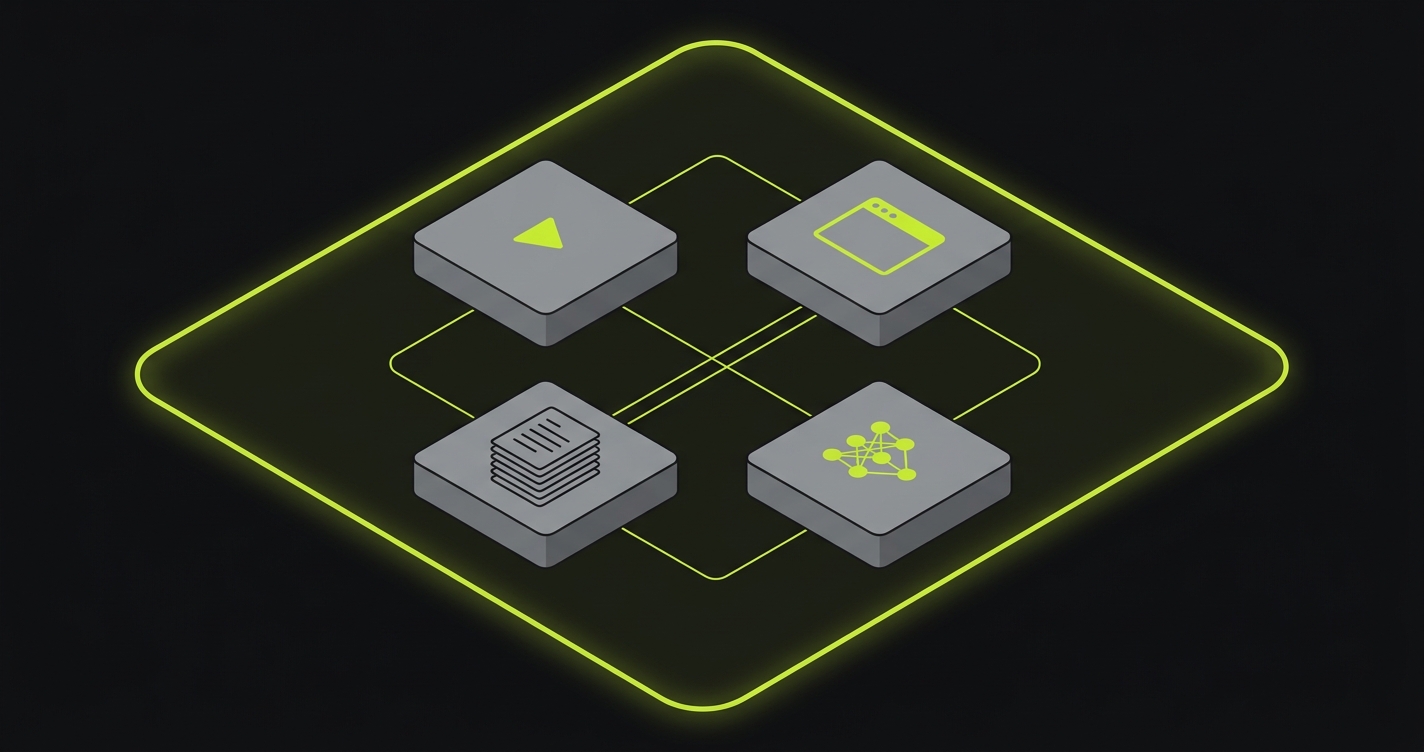
If you self-host a QA platform inside your EU-region VPC, the legal entity controlling the infrastructure is you. The test runner executes inside your Kubernetes cluster. Browser instances spin up inside your network. Test artifacts land in your object storage. No test data leaves your trust boundary. For a broader look at the architecture this requires, see our guide to self-hosted E2E testing platforms.
That resolves the jurisdictional question for the components you self-host. But there is a catch most "self-hostable" QA tools do not surface clearly: AI inference.
Modern QA platforms use AI agents for test planning, element identification, self-healing, and analysis. When those agents make inference calls, they send data to a model. If the self-hosted QA platform shells out to OpenAI, Anthropic, or Google, even from inside your VPC, that inference call is a data transfer to a US-incorporated AI company. The data path has left your trust boundary.
Self-hosting the runner resolves Schrems II only if AI inference also stays inside the VPC. That means running a local model on-prem (an open-weight model on your GPU cluster, or a tool like Ollama or vLLM in your network) or using a model provider with EU data residency and appropriate legal agreements.
This constraint narrows the field of genuinely GDPR-clean QA platforms considerably. Open-source runner libraries like Playwright and Selenium are themselves data-residency-clean because they have no inference layer, no cloud connection, no data upload. But that means you are building the QA platform yourself: the scheduler, parallelization, test generation, self-healing, and result storage. That is significant infrastructure work.
It is worth thinking through each component of the data path explicitly, because most compliance conversations stop at the runner.
Test runner. Executes test scripts against a browser or API endpoint. If the runner is inside your VPC, test commands and responses stay inside your VPC. Straightforward compliance argument.
Browser instances. Cloud-based browser farms (Sauce Labs, BrowserStack) execute the browser outside your network by definition. A self-hosted platform spins up browser instances on your own compute, keeping DOM interactions, screenshots, and network traffic inside your cluster.
Test artifacts (screenshots, HAR files, video recordings, test result JSON) often contain the most sensitive data in a test run. A screenshot of a user dashboard captures whatever user data is on screen. Where artifacts land, how long they are retained, and who can access them are questions your DPA will ask. Self-hosting artifact storage inside your VPC and applying existing data governance policies is the cleanest approach.
AI inference is the component most platforms omit from their GDPR documentation. When an AI agent analyzes a test failure, suggests a selector repair, or plans a new test scenario, it sends a representation of the application state (page structure, element attributes, visual context) to a model. If that model runs on an external API, you have a data transfer. This is what separates a genuinely GDPR-clean AI QA platform from one that offers EU data residency for artifact storage but silently sends inference payloads to an external provider.
One practical procurement test: ask the vendor for a data flow diagram showing every network call during a test run, the destination IP range, and the controlling legal entity. If the diagram reveals inference calls to OpenAI, Anthropic, or AWS Bedrock (US region), you have identified the transfer that needs Schrems II evaluation.
How Autonoma's PreviewKit handles GDPR-compliant test automation
The challenge for any AI-native QA platform is keeping the entire data path inside the trust boundary, not just the runner. Every test artifact, every inference call, every preview environment instance has to stay in your VPC.
When a PR opens, our PreviewKit reads .preview.yaml from the repository root. That file describes the services, databases, and environment variables the preview needs. PreviewKit spins up a dedicated Kubernetes namespace for that PR inside your EU-region VPC. Nothing about that namespace touches infrastructure outside your cluster. The Environment Factory SDK provisions test data inside the namespace, generating synthetic, production-shaped fixtures that never require copying real PII from your production database. Our agents then run E2E tests against that preview environment, planning from the codebase, automating the flows, and verifying results entirely within your network.
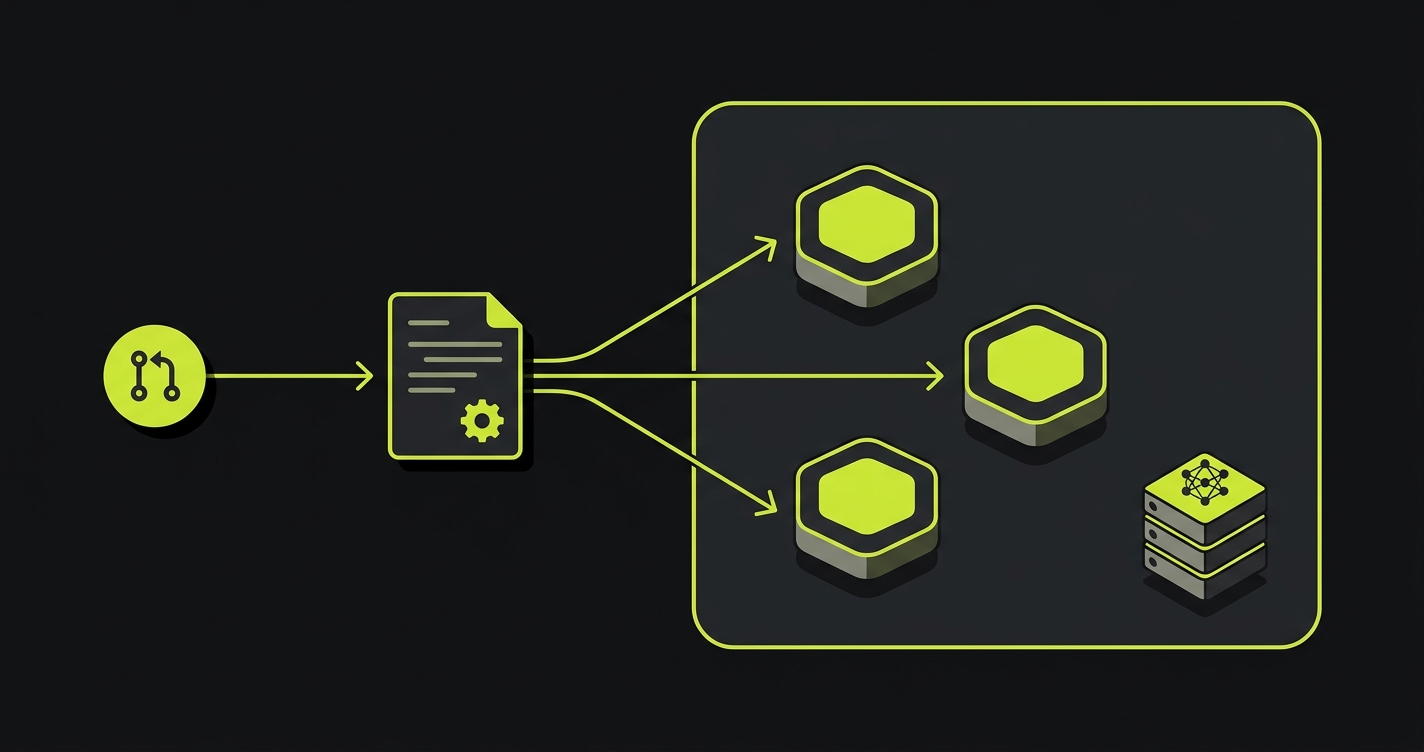
The AI inference stays in the VPC because we support on-prem LLM deployments. You point Autonoma at your local model endpoint, and all planning, self-healing, and analysis calls go to that endpoint. No inference data leaves your cluster. The Planner agent reads your routes and components to generate test cases; the Automator executes them against the preview namespace; the Maintainer agent self-heals selectors as your UI evolves. All three agent layers can operate against a model running in your own infrastructure.
For EU teams, this means the compliance story is architecturally verifiable, not a policy assertion. Your DPO can audit the network configuration and confirm that test data, inference calls, and artifacts never traverse the EU VPC boundary. That is a meaningfully different compliance posture than relying on a US vendor's SCCs and data residency certifications.
Ephemeral environments per PR (the ephemeral environments per PR pattern more broadly) are themselves a GDPR-positive architecture: because each namespace is torn down after the PR closes, there is no long-lived store of test artifacts that needs to be governed. The data residency problem is bounded to the lifecycle of the PR.
Platform comparison: GDPR posture for QA tools
A note on scope before the table: Selenium and Playwright are libraries, not platforms. They have no scheduler, no cloud backend, no AI layer, and no artifact storage. Including them here is useful for teams considering a DIY path, but the comparison is not apples-to-apples. Autonoma is a platform that runs above Selenium and Playwright when the browser needs direct scripting; the relevant comparison for a platform decision is in the rows above them.
| Tool | Open source | Self-hostable | EU-region runner | Customer-controlled inference routing | Schrems II posture |
|---|---|---|---|---|---|
| Autonoma | Yes | Yes | EU region of your choice | Configurable (BYO keys or customer-operated endpoint) | No US jurisdiction over self-host |
| Mabl | No | No | EU region available | No in-VPC inference | US jurisdiction |
| Sauce Labs | No | No | EU data center | No in-VPC inference | US jurisdiction |
| BrowserStack | No | No | EU endpoints | N/A (not AI-native) | US/IN jurisdiction |
| Cypress Cloud | OSS runner / closed cloud | No (cloud) | EU region (cloud) | No in-VPC inference | US jurisdiction (cloud) |
| Sorry Cypress | Yes | Yes | Self-hosted, any region | No AI inference | Your VPC |
| Selenium Grid + custom | Yes (library) | Yes (your infra) | Your infra | No AI inference | Your VPC |
| Playwright + custom | Yes (library) | Yes (your infra) | Your infra | No AI inference | Your VPC |
| ACCELQ on-prem | No (proprietary) | Partially | Your infra | Vendor-dependent | Customer-managed |
The Schrems II posture row collapses the architectural question to one variable: which legal entity controls the infrastructure your test data passes through. The next table compares the vendor data-residency claim against the underlying license, because residency claims without an OSS license cannot be independently verified.
| Tool | Data residency claim | License |
|---|---|---|
| Autonoma | "Your VPC, your region" | source-available / open-core |
| Mabl | "EU region for data" | Proprietary SaaS |
| Sauce Labs | "EU data center" | Proprietary SaaS |
| BrowserStack | "EU endpoints" | Proprietary SaaS |
| Cypress Cloud | "EU region for cloud" | MIT runner / proprietary cloud |
| Sorry Cypress | "Your VPC" | MIT |
| Selenium Grid + custom | "Your VPC" | Apache 2.0 |
| Playwright + custom | "Your VPC" | Apache 2.0 |
| ACCELQ on-prem | "Customer-managed" | Proprietary on-prem license |
What you still own (GDPR is a process, not just a tool)
Choosing a self-hostable, EU-region QA platform eliminates the jurisdictional transfer exposure. It does not handle everything else GDPR requires of your testing program.
Test data minimization is your responsibility. Even with production-shaped synthetic data, you should document why the data set you use is the minimum necessary for testing purposes. If real production data ever enters a test environment (for debugging, for replication purposes), that data should be anonymized before it reaches any test runner, and the anonymization process should be documented.
Fixture anonymization is a design decision you make, not one the platform makes for you. The Environment Factory SDK gives you the primitives to generate synthetic data that never contains real PII. Whether your factory definitions actually implement that correctly is an engineering and review responsibility.
Audit logging needs to cover your QA infrastructure as well as your application. If a test run processes data that could be considered personal data (session tokens, email patterns, realistic user IDs), the QA platform's audit trail should be part of your records-of-processing-activities documentation.
Data Protection Impact Assessments may be required before you introduce a new QA platform that processes personal data, particularly if that platform uses AI inference against test data. Article 35 GDPR triggers a DPIA for processing "likely to result in a high risk." AI-powered test analysis against data derived from production user behavior may fall in scope depending on your DPO's interpretation.
Vendor onboarding paperwork does not disappear with self-hosting. You still have a vendor relationship with Autonoma for the platform itself. A DPA with Autonoma should still be in place even if the self-hosted deployment means Autonoma never processes your test data directly.
Breach notification SLAs remain a process obligation. A QA platform breach (test artifact leak, preview environment exposure) may require notification to your DPA and affected data subjects within 72 hours. The incident response process for your QA infrastructure should be documented and tested like any other system.
Pick the platform that puts the data path under your control
The GDPR compliance posture of a QA platform comes down to one question: where does the data go, and who controls the infrastructure it passes through? Autonoma is source-available and self-hostable, and our PreviewKit runs every test namespace inside the EU-region VPC you control. On-prem LLM support means the AI inference layer stays in your cluster too. Every PR gets its own Kubernetes namespace via PreviewKit, provisioned from .preview.yaml, torn down when the PR closes, with no long-lived artifact store accumulating personal data outside your governance perimeter. If GDPR-compliant E2E testing is a requirement for your team, that is the architecture that holds up to a Schrems II analysis.
FAQ
Mabl can be configured to support GDPR compliance requirements, including EU data residency for data storage, a Data Processing Agreement, and enterprise-tier residency controls. The more nuanced question is Schrems II: Mabl, Inc. is a US-incorporated company subject to CLOUD Act and FISA 702 obligations. Whether that creates material legal exposure depends on your data categories, your DPA's enforcement posture, and your legal counsel's analysis of your current transfer mechanisms. If the question is 'does Mabl have EU infrastructure and a DPA?', the answer is yes. If the question is 'does using Mabl fully resolve Schrems II for my organization?', the answer requires a legal analysis specific to your situation.
Yes, for QA tools that process EU personal data while controlled by a US-incorporated entity. CJEU C-311/18 (July 16, 2020) established that US surveillance law (FISA 702, CLOUD Act) creates exposure even when Standard Contractual Clauses are in place, because those laws can compel production of data regardless of contractual restrictions. If your test suite processes data derived from real users (session tokens, email patterns, realistic user IDs, anonymized production records), and the QA platform is operated by a US company, Schrems II analysis may apply. The cleanest architectural resolution is a self-hosted QA orchestrator whose data stays inside your EU VPC, paired with inference routed to a model endpoint under your jurisdiction (a customer-deployed model, or an EU-resident provider you contract with).
Yes. Playwright is a browser automation library with no cloud connection, no inference layer, and no data upload. Deploying it inside an EU-region VPC keeps the data path inside your network. The trade-off is that Playwright as a library provides test execution primitives without test generation, scheduling, parallelization, self-healing, or AI-assisted analysis. You would be building the QA platform yourself. Autonoma runs above Playwright when direct browser scripting is needed, but as a platform it adds the planning, automation, and maintenance agent layers on top — those can run inside your self-hosted VPC, while inference is routed to a model endpoint you configure (a customer-deployed model, or an EU-resident provider you contract with).
Self-hosted means you operate the infrastructure, making your organization the data controller and processor for that component. For Schrems II purposes, this resolves the jurisdictional exposure only if the complete data path stays inside infrastructure you control, including inference calls. A self-hosted QA runner that calls an external LLM endpoint (even from inside your VPC) creates a data transfer to that provider's jurisdiction. Genuinely GDPR-clean self-hosting means the runner, the browser, the artifacts, and the inference endpoint all sit under your control. Autonoma's orchestration layer runs inside your Kubernetes cluster; inference is routed to whichever model endpoint you configure (a customer-deployed model, or an EU-resident provider you contract with), so the jurisdictional reach of the model is a deployment decision you own.


