
The 2026 CI/CD landscape has shifted from passive automation to active agentic validation. Traditional pipelines that merely run scripts and hope for the best are being replaced by intelligent agents that analyze code intent and verify behavior at the protocol level. This article explores how the Autonoma agentic architecture integrates into the CI/CD workflow to achieve a 'zero bugs' state, where regressions are caught and resolved autonomously before they ever reach a production environment.
The engineering teams of 2026 have moved past the era of 'hope-driven deployment.' For years, the industry accepted a certain level of regression as the inevitable price of velocity. We optimized our pipelines to run faster, but we struggled to make them smarter. The result was a culture of fear where every push to production was a gamble, and every release was followed by a frantic period of monitoring and rollback.
The traditional sequential pipeline (lint, build, test, deploy) has reached its limits. As AI coding agents accelerate the production of features, the manual review process has become a massive bottleneck. We wanted faster cycles, but we lacked the autonomous validation layers to support them. We were shipping at high speed, but our quality checks were still essentially stuck in the script-based era of 2024.
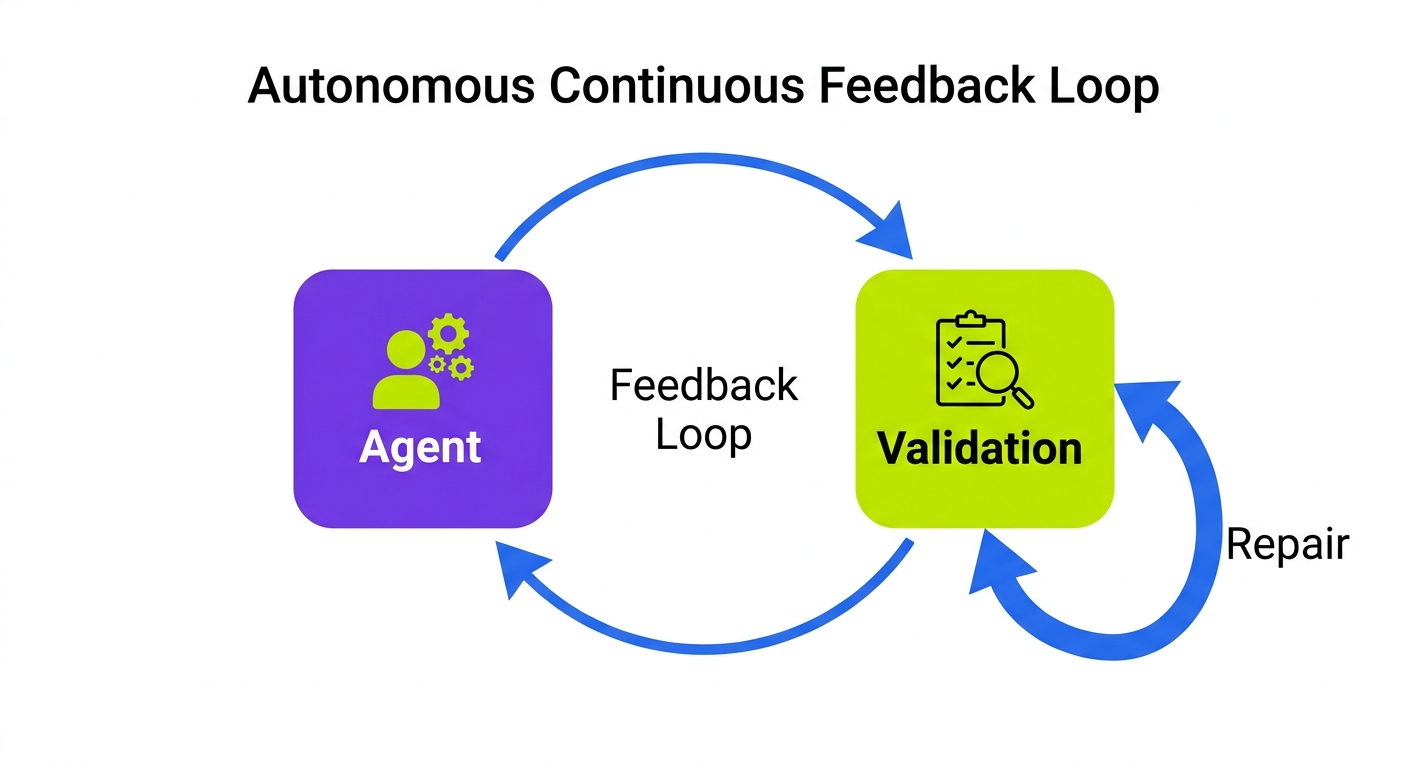
This self-healing capability transforms the CI/CD pipeline from a gatekeeper into a partner. Developers can push code with the confidence that the agentic layer will catch any issues and help them resolve them quickly.
Database State and CI/CD
Managing database state in CI/CD has always been a challenge. Teams often resort to using shared test databases, which leads to flakiness, or complex seeding scripts, which are difficult to maintain. The agentic pipeline solves this through intelligent state management.
The Automator Agent, understanding the requirements of each validation from the code itself, generates minimal, isolated database states for every run.
This isolation eliminates the flakiness associated with shared state and allows for massive parallelism in the pipeline. Thousands of validations can run simultaneously, each in its own clean environment, without any risk of interference.
The Narrative Shift: From Gates to Floors
The move to agentic CI/CD represents a fundamental shift in how we think about quality. For years, we viewed testing as a series of gates that code had to pass through. These gates were designed to keep bugs out, but they often ended up keeping features in.
The 2026 standard is built on the concept of a quality floor. We want to ship features rapidly, but we need to ensure they don't break the system. We must deploy an agentic layer that provides a persistent floor of validation. We want complex, stateful integrations, but we need them to be reliable. We use Autonoma to handle the underlying complexity of protocol and state management.
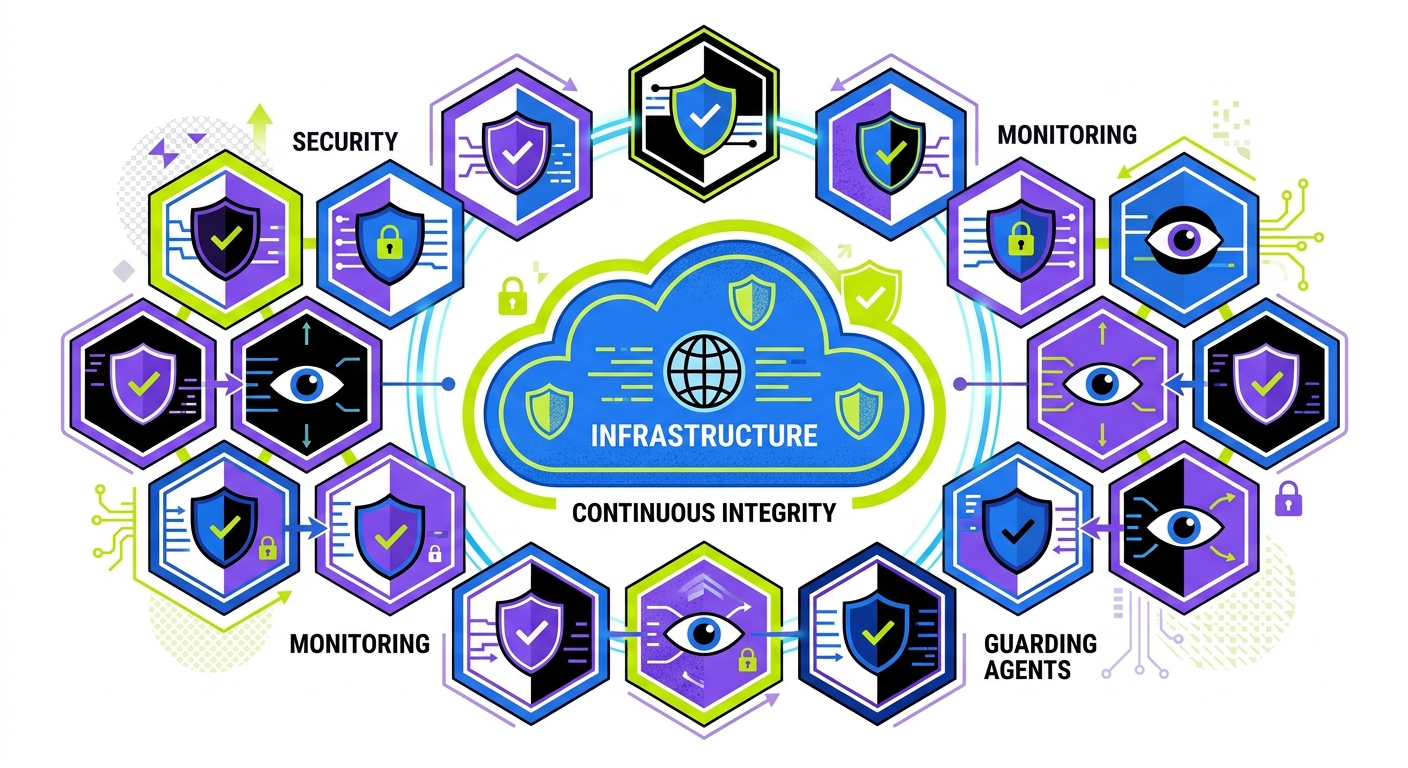
This shift in perspective transforms the CI/CD pipeline from a hurdle into a foundation. When you have a solid floor, you can move faster. When that floor is codebase-first, it adapts as you build.
Autonoma adds an AI-driven E2E testing layer to your CI/CD pipeline — agents generate tests from your codebase and run them on every PR, catching the bugs that unit and integration tests miss.
Implementing Zero Bugs CI/CD
The transition to a zero-bugs agentic pipeline involves several key steps.
First, you must integrate your agents deeply into your source control system. The agents need full access to the code, the PRs, and the commit history to build a complete understanding of the application's evolution.
Second, you need to adopt ephemeral infrastructure. The agentic pipeline relies on the ability to spin up isolated environments for every validation. This requires a -native architecture where infrastructure is as disposable as code.
Third, you must trust the agents. This is often the hardest part for engineering teams. It requires moving away from the manual review of every change and toward a model where the agents are responsible for the majority of the validation.
The implementation process usually starts with a shadow pipeline that runs alongside your existing CI/CD workflow. This allows you to build confidence in the agents' ability to catch regressions and resolve issues before you switch over completely.
The Economic Impact of Zero Bugs
The traditional approach to CI/CD was expensive: more code required more tests, which required more compute and more human maintenance. The cost of quality scaled linearly with the complexity of the codebase.
In the agentic model, the cost curve is flat. The agents are part of the infrastructure. Whether you are shipping one feature or a thousand, the agentic floor provides the same level of validation. The marginal cost of ensuring quality for a new feature is essentially zero.
This decoupling of cost and complexity allows startups to maintain the velocity of a small team even as they scale into a large enterprise. It eliminates the 'quality tax' that has traditionally slowed down growing companies.
For the modern engineering team, agentic CI/CD is not just a tool; it's a competitive advantage. It allows you to focus on what matters most: building value for your customers.
Conclusion: The Era of Integrity
The 2026 CI/CD pipeline is about more than just automation. It's about integrity. By deploying an agentic quality floor, you ensure that every push to production is backed by a layer of intelligence that understands your code and protects your system.
The agentic revolution has fundamentally changed the nature of software delivery. We no longer hope that our code is safe; we know it is. The bottleneck of manual review has been eliminated, and the era of zero bugs is finally a reality.
The floor is solid. The pipeline is active. The integrity of your SaaS is absolute.
The Maintainer agent is focused on resolving regressions in the CI/CD pipeline before they hit production. It provides the analysis and suggest fixes that engineers can then apply.
No. Early-stage startups benefit the most from agentic CI/CD as it allows them to maintain high quality with a very small engineering headcount.


