
Autonoma was built with a single conviction: there is too much waste and technical debt in software development, and most of it can be eliminated with AI.
Today, we are convinced that the biggest source of that waste is verification: making sure your code works and that you're not shipping regressions. AI has transformed how we write code, but we're still testing with legacy tools and brute-force human effort, and that gap is only widening.
Why existing approaches fall short
Traditional frameworks like Playwright, Cypress, and Appium are brittle, noisy, and difficult to maintain at scale.
AI prompting and click-and-record tools (including the previous version of Autonoma) require extensive setup, break easily, require proper test infrastructure in place and can't adapt to code changes by generating new coverage automatically.
Browser agents and MCP-based tools can exercise individual features, but they don't deliver full application coverage, they don't manage test users or environments, and they leave you uncertain about what's actually being tested and how.
None of these were designed for the way software is built today, therefore we believe a comprehensive, AI-native solution needs to exist, and that's what we're building.
We call it AI self-driving testing.
Why "self-driving"?
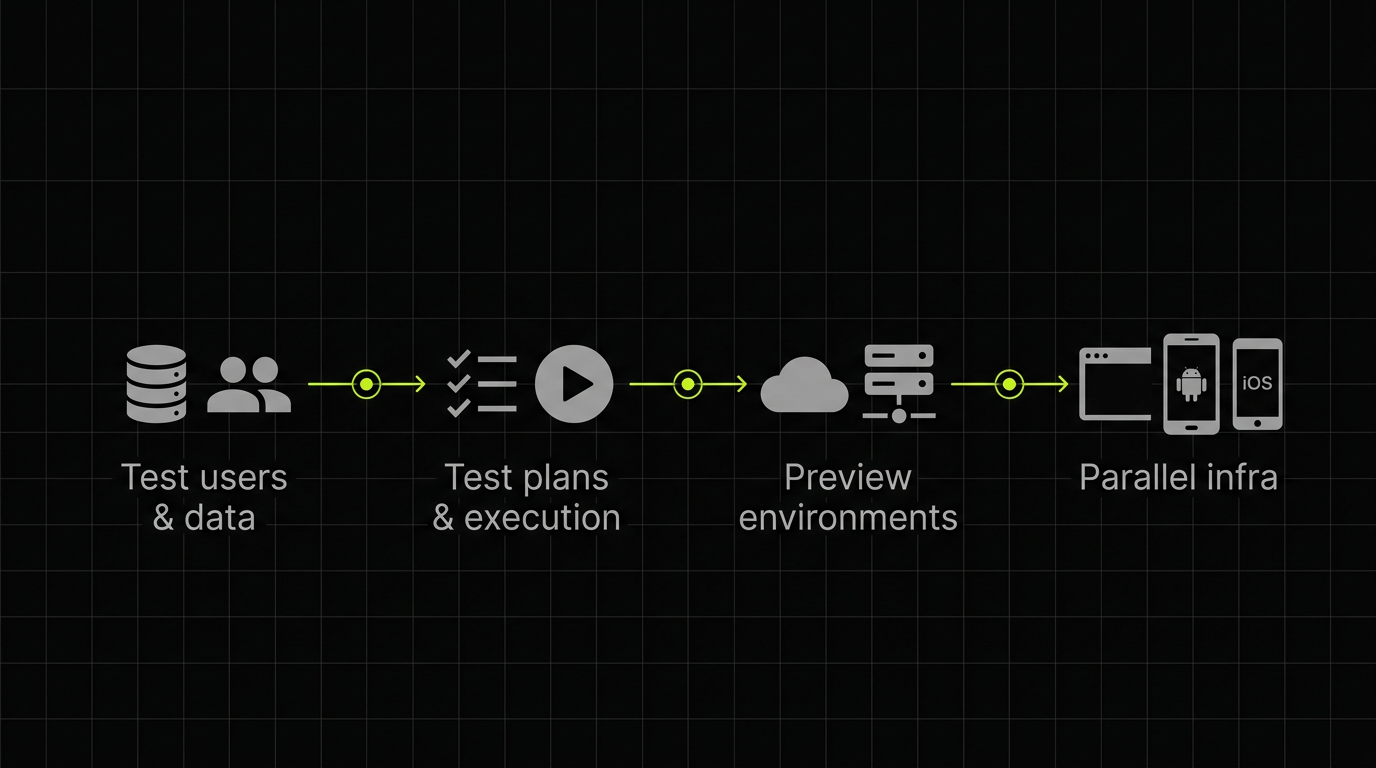
Because Autonoma handles everything required to build and maintain a testing platform, end to end:
- Test user generation and management: automatically adapting as your database schema evolves.
- Test plan generation, editing, deprecation, and execution: scaling with your codebase as it grows.
- Test preview environments: provisioned as your infrastructure develops.
- Test infrastructure to run tests in parallel: scalable Web browsers, Android emulators and iOS simulators.
Why open source?
We want to build for the developer community and establish the standard for AI-native development. We believe that requires three commitments:
- Quality for everyone: AI democratized writing code, we're democratizing shipping it with confidence.
- Your code, our code: Autonoma's engine reads your codebase, you should be able to read ours.
- Ship it your way: No lock-in, deploy it, extend it and fork it as you want.
Try it today
We just shipped our alpha, you can generate and run test cases for free, starting now. We're shipping updates daily and working toward this mission in the open.
We'd love for you to try it out, contribute, and help spread the word. Access our code repository on GitHub, and our landing page.
Thank you,


