

Azure Test Plans pricing is a per-user add-on layered onto Azure DevOps: you pay for the "Basic + Test Plans" access level, priced at roughly $52 per user per month, rather than buying a separate manual test case management tool. It is not included in the free tier or the plain $6/user Basic plan, though it comes at no extra cost with a Visual Studio Enterprise, Test Professional, or MSDN Platforms subscription. Figures reflect Microsoft's published pricing as of 2026. Check azure.microsoft.com for the current number before budgeting.
Most teams find the $52 line item the same way: someone on the QA side asks for manual test case management inside Azure DevOps, an admin flips on Test Plans for a handful of users, and the next invoice has an access level nobody budgeted for. The assumption is usually that Test Plans is "just part of Azure DevOps," the way Boards and Repos are. It isn't.
If you're already living inside the Azure DevOps stack and pricing-checking Test Plans before turning it on for your QA seats, this post is for you. It's not an introduction to what software testing is. It's the number, where it comes from, and whether it's worth paying per seat.
Azure Test Plans pricing breakdown: the Azure DevOps Test Plans cost
Azure DevOps prices Test Plans as an access level, not a bolt-on subscription with its own checkout. Here's what actually shows up on the bill.
| Item | Cost | Notes |
|---|---|---|
| Azure DevOps Basic | First 5 users free, then $6/user/mo | Boards, repos, pipelines. No test case management. |
| Basic + Test Plans | ~$52/user/mo | Assign only to users who need it. |
| VS Enterprise / Test Professional / MSDN Platforms | $0 extra | Test Plans included in the subscription. |
| Stakeholder access | Free | Can view work items, not author test plans. |
Sources: Azure DevOps pricing and Microsoft Learn, as of 2026. There's no cheaper "Test Plans only" tier: the $52 figure bundles ordinary Basic features (boards, repos, pipelines) with test case management in one per-user price. Prices change, so confirm the live number on Microsoft's pricing page before budgeting.
The detail that trips people up: Test Plans is assigned per user, not switched on org-wide. You choose which individuals get bumped from Basic ($6/user/month, after the first five free) up to Basic + Test Plans (~$52/user/month), and everyone else stays on Basic or free Stakeholder access.
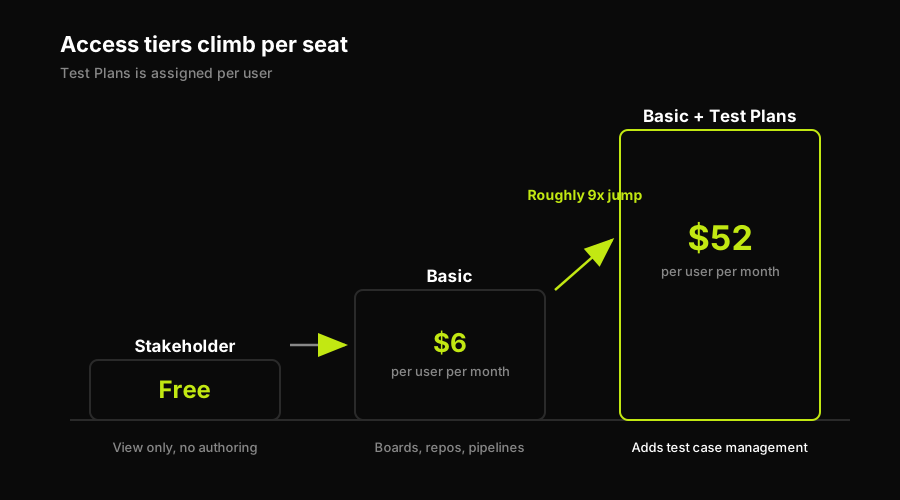
Basic + Test Plans is assigned per user, so only the people who need manual test case management carry the higher access level.
How it bundles with Azure DevOps
Test Plans was never sold as a standalone product. It's an access level that rides on top of an existing Azure DevOps organization, assigned per user, per project, through the same admin panel that manages Basic and Stakeholder access.
That per-user assignment is the point of the model. You don't pay $52 org-wide to unlock manual test case management once. You pay it for the people actually writing test cases and running manual suites. A 50-person org where 6 people own QA only needs 6 seats bumped to Basic + Test Plans.
Microsoft also carves out an exception: users already holding a Visual Studio Enterprise, Test Professional, or MSDN Platforms subscription get Test Plans included at no additional per-user charge. Organizations that standardized on Visual Studio Enterprise for senior engineers years ago may find that inclusion already covers several of the seats that would otherwise need the $52 add-on.
Run the math on a mixed team of 24: 20 developers on plain Basic, 4 QA on Basic + Test Plans. The first five Basic seats are free, so the remaining 15 run ~$90/month. The 4 QA seats at ~$52 each add ~$208/month, just under $300/month total, all attributable to those 4 seats.
When Azure Test Plans is (and isn't) worth it
The honest answer depends on what kind of test case management tool your team needs, not on whether Azure DevOps is a good product (it is).
Azure Test Plans earns its per-user cost when a team has a real manual and exploratory test-case backlog: people running scripted manual suites before a release, logging exploratory sessions against work items, and wanting those cases next to the boards and repos they already use daily. If your org is deep in the Microsoft stack and QA is genuinely manual-first, paying $52/user/month to keep that work inside Azure DevOps is a reasonable trade.
It's weaker when most of what you're testing is automated end-to-end coverage. An automated E2E suite doesn't need a human authoring manual steps or triaging results one case at a time. It needs the cases to exist correctly and stay current. Paying per seat to hand-maintain that backlog is overhead the automation should be absorbing.
That's the reframe worth sitting with: for teams moving toward automated E2E, when an agent generates and maintains tests directly instead of a person doing it by hand, there's far less of a manual backlog left to assign to a $52 seat. The bill doesn't drop because Microsoft changed the price. It drops because the backlog got smaller.
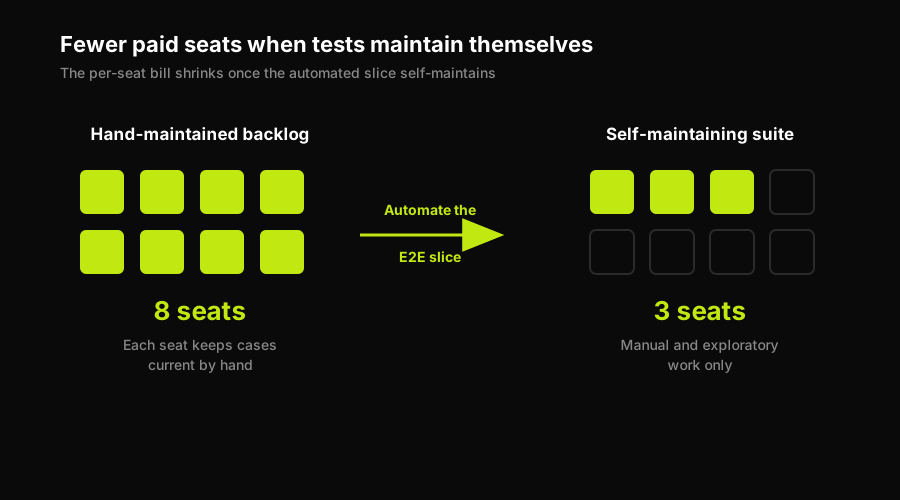
Seats that existed only to hand-maintain automated cases fall away
We built Autonoma around that shift, though it's worth being precise about scope. Autonoma is browser and web end-to-end testing, not a test management platform. It generates and runs E2E tests from your codebase and does not manage manual cases, exploratory sessions, or compliance suites. Teams that need those workflows still belong on a real test case management tool, Test Plans included.
How Autonoma Shrinks the E2E Slice of That Per-Seat Bill
The pattern this post documents is straightforward: Azure Test Plans charges per seat for people managing a test-case backlog, and part of that backlog, the automated end-to-end slice, doesn't actually need a person maintaining it by hand.
Autonoma's agents are built specifically for that slice. A Planner agent reads your codebase, routes, components, user flows, and plans the E2E test cases directly from the code, including generating the endpoints needed to put your database in the right state for each scenario. An Executor agent then runs those planned cases against a live preview environment, driving the UI the way a person would, without anyone recording a flow or writing a script by hand. A Reviewer agent evaluates every run and classifies what it finds: a real bug, an agent error, or a mismatch between the test and the current plan.
The piece that matters most against a per-seat bill is the Diffs Agent. On every pull request, it analyzes the code diff and adds, updates, or deprecates test cases to match, so the automated suite tracks the codebase without a human going back into a test case management tool to update the record every time a flow changes. That's the exact labor Azure Test Plans prices per seat: someone keeping cases current. Automate the maintenance, and fewer seats need to exist for that purpose alone.
None of this replaces what Test Plans does for manual and exploratory work, and it's not trying to. A QA engineer running an unscripted exploratory session, logging what they found against a work item, still needs a place to do that, and Azure DevOps is a reasonable place to do it if you're already living there. What changes is how much of your per-seat Test Plans bill is attributable to automated E2E cases that no longer need a human seat to keep in sync.
Final thoughts
Azure Test Plans pricing is simple to state and easy to underbudget for: $52 per user, per month, for the Basic + Test Plans access level, free for Visual Studio Enterprise and Test Professional subscribers, and not part of the plain Basic plan. The number itself isn't the trap. The trap is assigning it to seats managing a backlog that's mostly automated and could be shrinking instead of growing.
Before you decide how many seats need Test Plans, separate the two questions. How many people are doing real manual and exploratory testing that belongs inside Azure DevOps, next to your boards and repos? That headcount is legitimate, and $52/user/month is a fair price for it. How many of the remaining seats exist mainly to hand-maintain an automated E2E backlog? That's the number worth challenging first, especially if Autonoma is maintaining that E2E slice directly from the codebase instead.
For the wider landscape beyond Azure DevOps, our test case management tools comparison is the buyer-neutral starting point, and our best test management software shortlist covers the leading platforms side by side. If you're pricing-checking against another per-seat tool specifically, our Testmo pricing breakdown is a useful sibling comparison.
FAQ
Azure Test Plans is priced through the Basic + Test Plans access level at roughly $52 per user per month, per Microsoft's published pricing as of 2026. It is assigned per user, not organization-wide, so you only pay for the seats that need manual test case management. It's included at no extra cost for users with a Visual Studio Enterprise, Test Professional, or MSDN Platforms subscription. Confirm the current figure at azure.microsoft.com before budgeting.
No, not in the free tier or the plain Basic plan. Azure DevOps Basic gives the first 5 users free, then $6/user/month, for boards, repos, and pipelines, but it does not include test case management. Test Plans requires upgrading specific users to the Basic + Test Plans access level, priced separately at roughly $52/user/month.
Azure Test Plans is priced per user, per month, as part of the Basic + Test Plans access level rather than as a standalone add-on with its own SKU. You assign it individually to the users who need manual test case management, and it is included free for users already covered by a Visual Studio Enterprise, Test Professional, or MSDN Platforms subscription.
You need it if your team runs manual or exploratory test cases and wants that work living alongside Azure DevOps boards and repos. You likely don't need it for every seat if your organization's testing is mostly automated end-to-end coverage, since that automated slice doesn't require a person authoring or running cases by hand inside a test case management tool.
It's worth the per-user cost for teams with a genuine manual and exploratory testing workload who are already committed to the Azure DevOps stack. It's a weaker value for seats that exist mainly to hand-maintain an automated E2E test backlog, since that maintenance work can increasingly be handled by tooling that generates and updates tests directly from the codebase rather than by a person inside Test Plans.


