

Managed playwright vs self hosted is an ownership decision. Self-hosting means your team owns the runner fleet, browser dependency upgrades, parallelization config, flakiness triage, and the assertion-authoring work that keeps tests meaningful as the app changes. Managed shifts much of that work to a vendor, but introduces a different tradeoff: less direct control, a recurring vendor relationship, and dependency on someone else's release cadence.
This article is for teams who already have Playwright tests, or are about to invest in them, and are weighing whether to run the infrastructure themselves or hand it to a managed provider. If you are at a Series A or B company shipping 10 to 40 PRs per day, you almost certainly have AI-assisted development in your workflow. That is exactly where this decision bites hardest: AI test generation can scaffold a Playwright suite fast, but it does not remove the work of running, maintaining, and keeping that suite meaningful. Autonoma is one managed answer to that ownership problem, and I will frame it honestly against the DIY option throughout.
This is not for pre-seed no-QA teams starting from zero tests. That audience has a different problem. Here, the pain is not absence of testing. It is discovering how much ownership a DIY Playwright suite carries, and finding that AI test generation did not make that ownership disappear.
What Self-Hosted Playwright Still Makes You Own
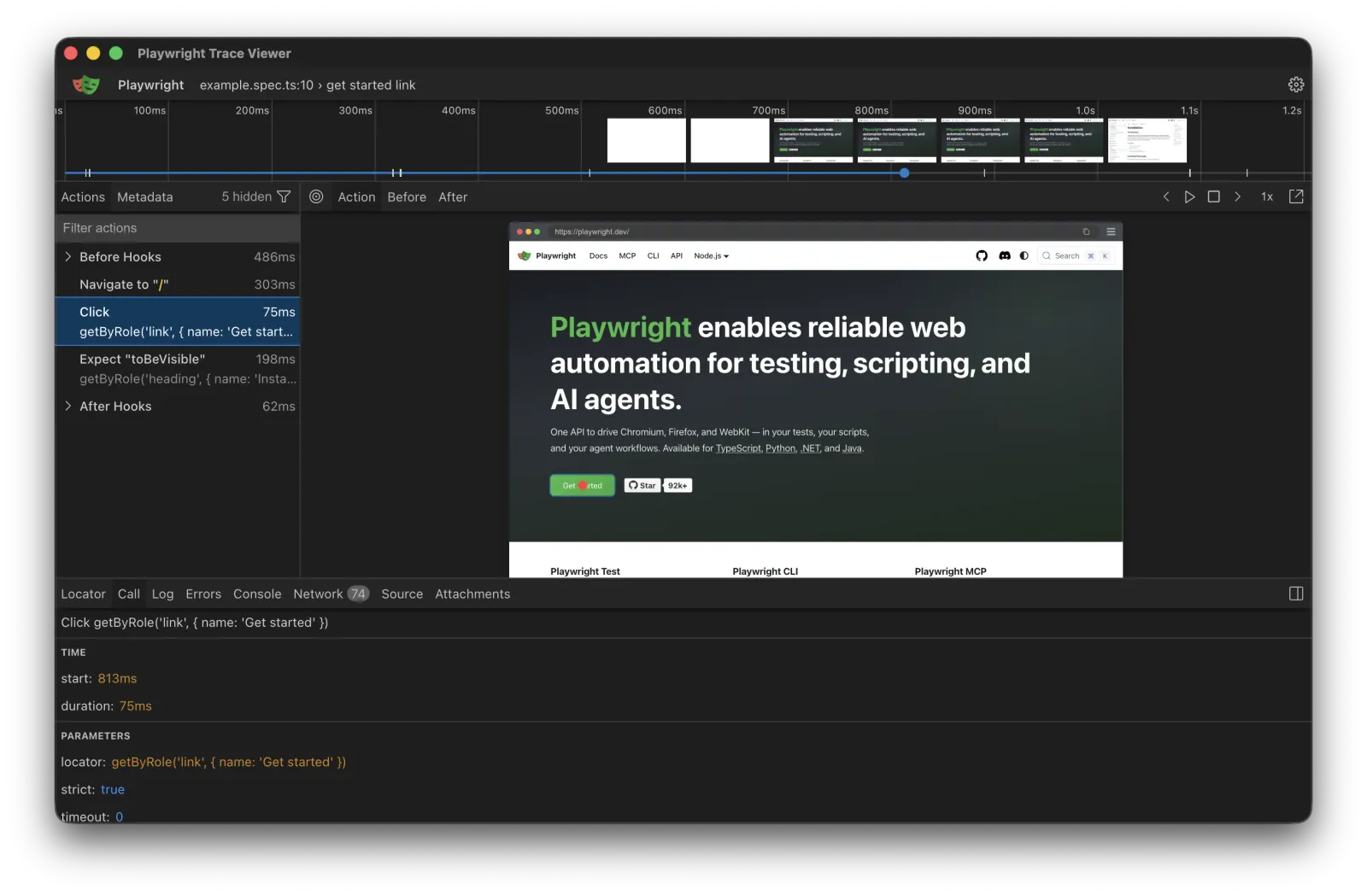
Playwright gives you a strong automation framework. Self-hosting it means your team owns the operating layer around that framework. Here is where the work lives.
| Dimension | Self-hosted Playwright | Managed E2E |
|---|---|---|
| Runner operations | You configure CI runners, browser binaries, sharding, artifacts, retries, and capacity as the suite grows. | The platform owns the execution runtime, capacity planning, browser upkeep, and reporting plumbing. |
| Assertion ownership | Your team decides and updates each expected outcome. AI can scaffold, but it cannot supply business-correct expected values by itself. | The managed layer can plan and execute scenarios, while your team still reviews product-specific correctness. |
| Flake triage | Your team diagnoses selector drift, timing issues, environment differences, rerun policy, and root cause. | The vendor absorbs routine runner drift and surfaces failures with execution context. |
| Long-term maintenance | Test updates, browser upgrades, deprecations, suite pruning, and coverage gaps remain part of your backlog. | The platform maintains the runtime and helps keep coverage aligned as the application changes. |
| Control/compliance | You keep maximum control over logs, data residency, custom environments, and internal security policy. | You trade direct control for vendor operation, and you need to evaluate security, data handling, and deployment fit. |
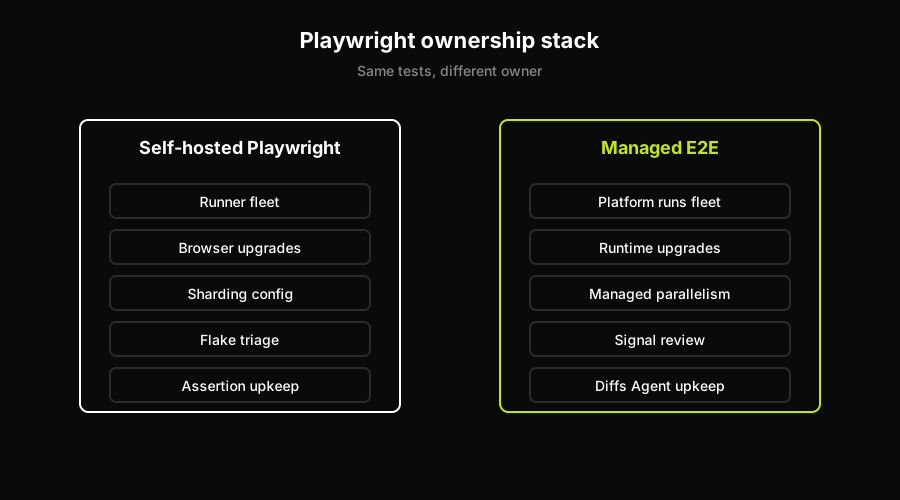
Self-hosted Playwright keeps the ownership stack in-house; managed E2E moves it to the platform.
To be direct about the tradeoffs in the other direction: DIY self-hosted Playwright has real advantages. You have full control over the test logic, complete access to runner logs, no vendor lock-in, and the ability to satisfy strict data residency requirements by keeping everything in your own infrastructure. If you have a dedicated platform or QA team that wants to own the test infrastructure layer, self-hosting is a legitimate and defensible choice. The argument for managed is not that DIY is wrong. It is that DIY makes ownership explicit, and some teams do not want that layer on their roadmap.
The Hidden Work: Writing and Maintaining Real Assertions
Here is the part that AI test generation marketing consistently elides. "AI generates your Playwright tests" is true. "AI removes the work of keeping your tests meaningful" is not.
The work that stays with your team regardless of what generated the initial test file: deciding what to assert. Not whether to assert, not the syntax of the assertion. The business-correct expected value. What should the checkout total actually be after a 15%-off coupon? What state should the database be in after a failed payment? Which redirect is the correct one when a session expires?
One of our customers at a Series B startup said it plainly after auditing their AI-generated suite: "That test passes and it asserts something, but it's not really asserting what it should be asserting." The test was green. The assertion was wrong. No amount of scaffolding tooling can fix that, because the problem is not scaffolding. It is that the correct expected value lives in a product specification or a business-logic document that the generation model never read.
This is the assertion-authoring burden, and it is irreducible in a self-hosted Playwright setup. Someone on your team has to own every assertion in your suite and keep those assertions correct as the product evolves. AI generation speeds up the first draft. It does not answer whether that draft was right.
The same customers running AI-generated suites and finding this gap are the ones who see their QA engineers still catching things in staging that CI never flagged. As one engineering team described it: "It doesn't cover the business case, and our QA engineers are still finding things." That is not a tooling failure. It is a verification gap. AI verification is only as trustworthy as its independence from the thing being verified. When the same model writes the code and the test, the bug becomes the expected value. Green signals consistency, not correctness.
This is exactly why the why AI misses business-logic bugs problem does not go away when you add more test generation. The source of truth for what is correct behavior has to come from somewhere independent of the code that was just written.
How Autonoma Delivers Managed E2E Without Owning the Runner Layer
The concrete pain so far: a self-hosted Playwright suite carries runner operations, flakiness triage, assertion-authoring burden, and ongoing test maintenance. AI test generation speeds up scaffolding but does not address the assertion-quality or maintenance problems.
We built Autonoma as managed preview environments with E2E testing built in, which addresses that ownership structure. Four agents handle the verification work that otherwise stays with your team.
Planner reads your codebase directly: routes, components, user flows. It plans test cases from that analysis and generates the endpoints needed to put your database in the correct state for each scenario. No one clicks through the app, records flows, or writes a test specification. The codebase is the specification. This is the source of the independence that self-referential AI-generation lacks: Planner derives test cases from code analysis, not from the same generative pass that produced the feature code. Executor runs those tests against a live preview environment per PR. Reviewer evaluates each run and classifies what it finds: a real bug, an agent error, or a test/plan mismatch. Diffs Agent analyzes each PR, adds and deprecates test cases, and keeps the suite aligned as your code changes.
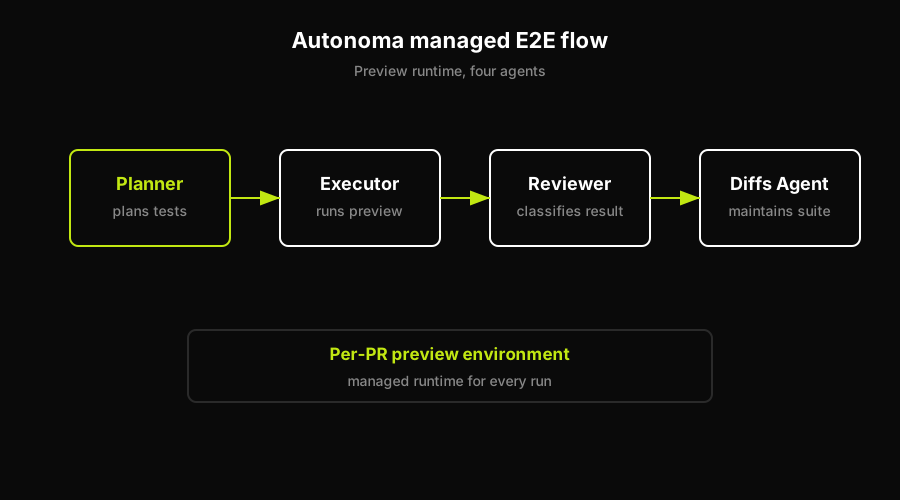
Autonoma turns Playwright ownership into a four-agent managed E2E flow.
The infra ops side, runner capacity, browser binary management, parallelization, is handled by the platform. Your team does not own the fleet. On assertion quality: because Planner derives test scenarios and expected outcomes from codebase analysis independently, the tautological-test failure mode ("test asserts the implementation back to itself") is structurally avoided. The tests are not generated by the same model that wrote the feature; they are planned from the code's observable structure.
For teams with data-residency requirements, Autonoma's platform is open-source and self-hostable. The full managed experience is available as a cloud service; the self-hosted path gives you the same agent architecture running in your own infrastructure.
Where AI Test Generation Does and Does Not Help Here
The honest split, because this matters when you are evaluating the managed-vs-self-hosted decision in the context of an AI-assisted workflow.
AI generation genuinely helps with: boilerplate test file setup, selector generation for well-structured DOM, page object scaffolding, first-draft coverage breadth across routes you have not manually touched, and repetitive form-flow tests where the correct behavior is obvious. If you are building a self-hosted Playwright suite from scratch, using AI generation for the initial scaffolding saves real time. That is not theater.
AI generation does not help with: authoring the correct assertion for business-critical flows, identifying which tests are actually protecting something (vs. asserting the implementation back to itself), diagnosing flakiness root-causes in your specific infra, managing the runner fleet, or keeping tests green as your application architecture changes. These are the ownership centers in a self-hosted setup, and they remain with your team regardless of how the test files were generated.
The "playwright vs ai test generation" framing misses the real question. It is not generation vs. Playwright. It is: once you have a Playwright suite, who owns the ongoing work of keeping it trustworthy? That is the question the managed-vs-self-hosted decision actually answers.
For a deeper look at how AI-generated tests interact with the broader testing stack, manual QA vs AI testing covers the capability split honestly.
Decision Guide: When DIY Makes Sense, When Managed Wins
Neither answer is right for every team. Here is the honest version.
DIY self-hosted Playwright makes sense when:
You have a dedicated platform or QA engineering team that specifically wants ownership of the test infra layer. Not "we have engineers who could run it," but engineers whose job description includes test infrastructure. The difference matters because the ongoing ops burden (capacity tuning, flakiness triage, browser upgrade cycles, assertion quality review) is a real workload, not background noise.
You have strict data residency requirements that you must self-operate. Some regulated industries, enterprise contracts, or security postures require that test execution data never leaves your own infrastructure. If "no third-party vendor" is a hard requirement, you need the self-hosted path regardless of which tool you use.
You have an unusual stack, custom browser environments, or deeply specialized test requirements that off-the-shelf runners cannot accommodate.
Managed makes sense when:
Runner operations and suite maintenance are eating sprint capacity. The reliable signal: flakiness triage, runner work, and test-update cycles are competing with new feature work. At that point, the self-hosted setup is no longer just a framework choice. It is a standing ownership commitment.
You do not have a dedicated test-infra function and are unlikely to build one. For a fast-moving engineering team, building and operating a Playwright runner fleet is a distraction from product work. The maintenance loop compounds as the suite grows.
You want independent verification without owning the verification infrastructure. For the reasons laid out in the assertion-authoring section above, managed E2E that derives tests from your codebase directly can provide a different signal than AI-generated, human-maintained suites. The self-hosted E2E testing platform comparison goes deeper on the infra tradeoffs if you are evaluating that path.
Where Autonoma fits:
If the reason you are choosing managed is that your team does not want to own runner operations, Autonoma Cloud is the direct path: $499/mo for 1M credits per month. That plan includes GitHub integration, Web, iOS & Android testing, Unlimited users, SSO & RBAC, Slack channel integration, Priority support, and Managed infrastructure.
The positioning is simple: your team keeps product judgment and business-rule correctness; Autonoma owns the repeatable preview-environment E2E layer that would otherwise become a Playwright operations backlog. You are not buying a hosted runner for scripts your team still has to write and maintain. You are buying managed verification: agents plan tests from the codebase, run them against live previews, review failures, and keep coverage aligned as the app changes.
The Free plan is the low-risk starting point: $0, 100K credits to get started, no credit card required. Use it to validate whether the agent workflow produces useful signal on your app before you commit the runner layer to your roadmap.
Self-hosted Autonoma is the answer when managed cloud is the wrong deployment model, not when you want to go back to hand-owning raw Playwright. The self-hosted option is for teams that need their own infrastructure; Autonoma's pricing page frames it as "Run on your own infrastructure. No limits, forever." That keeps infrastructure control while avoiding the core DIY trap: treating a Playwright framework as if it were a complete verification system.
If you are already running Playwright and evaluating the framework choice itself, the Playwright vs Selenium 2026 analysis covers the framework-level decision separately from the managed-vs-DIY question.
FAQ
Self-hosting Playwright makes sense if you have a dedicated test-infrastructure team, strict data-residency requirements that prevent using a managed vendor, or a specialized stack that off-the-shelf runners cannot support. For teams without dedicated test-infra engineers, the ongoing ops burden includes flakiness triage, browser upgrades, capacity tuning, and assertion maintenance. The decision is a function of your team's ownership appetite, not just the tooling choice.
Managed Playwright platforms can take over runner operations, browser upkeep, parallelization, artifact handling, flake context, and parts of suite maintenance. They do not remove the need to decide what behavior is correct. Your team still needs an independent source of truth for business rules, acceptance criteria, and product-specific expected outcomes.
Autonoma Cloud is $499/mo for 1M credits per month. The plan includes GitHub integration, Web, iOS & Android testing, Unlimited users, SSO & RBAC, Slack channel integration, Priority support, and Managed infrastructure. Autonoma also has a Free plan at $0 with 100K credits to get started and no credit card required, plus a Self-hosted option for teams that need to run on their own infrastructure.
Playwright is easier to maintain than Selenium, but maintenance is still real work. Flakiness triage, selector updates as your UI evolves, browser binary upgrades, and assertion quality review are ongoing responsibilities in any self-hosted Playwright suite. The framework does not heal itself. For teams using AI test generation, the authoring of correct assertions remains fully manual: AI scaffolds the test shape but cannot supply the business-correct expected value. Self-healing test platforms address the selector-drift portion of maintenance but not the assertion-quality portion.
Partially. AI generation reduces the upfront scaffolding work: it can write page objects, generate selectors, and produce first-draft test files faster than a human. It does not remove the ongoing work of keeping assertions correct as your product evolves, triaging flaky runs in your specific infra, or managing the runner fleet. The assertion-authoring burden, deciding what correct behavior actually is for your business logic, is irreducible by generation tooling because the source of truth (the product specification) is not available to the model. Teams using AI-generated Playwright suites consistently report that QA engineers still catch bugs that the generated tests miss.
The core tradeoff: DIY Playwright gives you full control, no vendor dependency, and the ability to satisfy strict data-residency requirements. The ownership burden is the operations stack: infra, flakiness ops, browser upgrades, assertion maintenance. Autonoma Cloud shifts that operational burden into a managed E2E layer at $499/mo for 1M credits per month. Self-hosted Autonoma keeps execution on your own infrastructure when control is the blocker. For teams with dedicated QA/platform engineers who want full control over raw Playwright, self-hosting is still a defensible choice.


