

PractiTest pricing is structured around per-user licensing across a small number of plan tiers, but PractiTest does not publish specific per-seat dollar figures anywhere on its site. Every tier, from small QA teams to enterprise deployments, routes through a "contact sales" quote built around your user count, feature needs (SSO, integrations, dedicated support), and contract length. Expect an annual contract and a sales conversation before you see an actual number.
Search "PractiTest pricing" and most results repeat the same non-answer: fill out a form, book a call, wait for a quote. That's not evasiveness so much as how mid-market and enterprise test management platforms tend to price themselves once a buyer needs SSO, custom permissions, and a dedicated account manager instead of a self-serve checkout button. Understanding why the number is hidden, and what actually drives it, matters more than any leaked price screenshot floating around a review site.
This post breaks down PractiTest's plan structure, the mechanics of what you actually pay under a quote-based per-user model, and how that model stacks up against Qase and Testmo on price. It also asks the harder question buried in every renewal: whether the size of the manual test backlog driving your quote is fixed, or whether part of it could shrink.
PractiTest plans and pricing
PractiTest doesn't publish a self-serve pricing calculator or a public tier grid the way some competitors do. What is public, from PractiTest's own site and sales materials, is how PractiTest's plan tiers are structured: full-user licenses on a base tier, an enterprise tier layered with security and support features, and a separate lighter-weight seat type for people who only need to view results, not author test cases.
| Plan | Pricing model | What it unlocks | Best for |
|---|---|---|---|
| Standard | Quote-based, per user | Case management, run tracking, traceability, API | Small-to-mid QA teams |
| Enterprise | Quote-based, custom contract | SSO, custom roles, dedicated support, integrations | Regulated or large QA orgs |
| Viewer/Guest seat | Quote-based, discounted seat | Read-only access to results and reports | Stakeholders needing visibility only |
PractiTest doesn't market these as named self-serve tiers with public numbers attached. Every row above routes through a sales conversation, and the final quote depends on total seat count, which feature tier you need, and contract length. Treat the labels above as descriptive of how PractiTest's offering is structured, not as official product names.
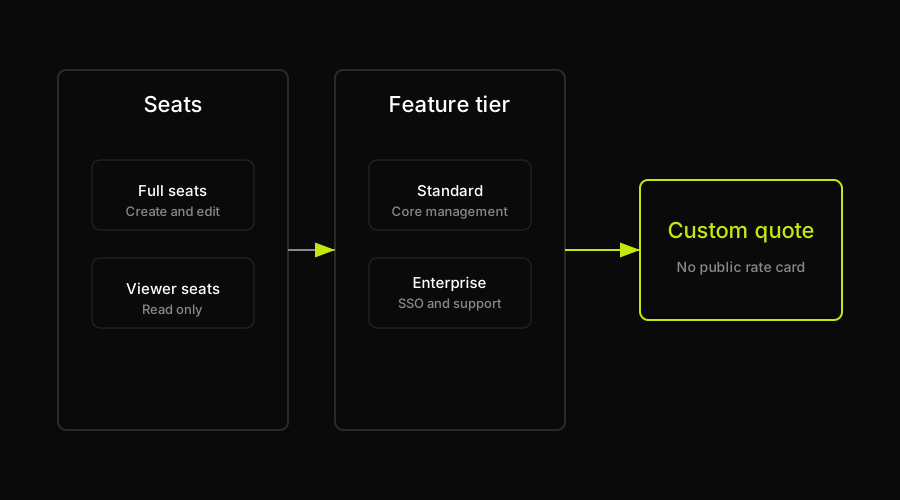
PractiTest's quote is a function of seat count and feature tier, not a published rate card.
What you actually pay
Quote-based per-user test management pricing follows a predictable shape even without a public number to plug in. The core lever is full-user seat count: every person who authors, edits, or executes test cases inside PractiTest needs a full license, and that's the seat type vendors in this category price against. Viewer or read-only seats, where they exist, typically cost less because they don't touch the authoring workflow.
Most vendors selling this way, PractiTest included, also apply a minimum seat count on new contracts, so a two-person pilot rarely gets a two-seat price. Annual billing is the default; month-to-month, where offered at all, usually carries a premium. On top of the base per-seat rate, expect add-on line items: onboarding and implementation support, a dedicated customer success manager, premium support SLAs, and custom integrations beyond what ships out of the box. None of that shows up on a landing page. It shows up in the proposal, after a sales call, once your team size and feature list are on the table.
PractiTest vs Qase vs Testmo on price
PractiTest, Qase, and Testmo all sell test management, but they sell it through three different pricing models, and the model matters more than any single dollar figure.
PractiTest is quote-based and per-user: no public rate card, a sales conversation, and a price that scales with seat count and feature tier, as covered above.
Qase takes the opposite approach. It publishes a free tier for small teams and posts per-user pricing for its paid plans directly on its site, so you can estimate a rough cost before talking to anyone. Our Qase pricing breakdown covers the current tiers in detail.
Testmo breaks from per-seat pricing entirely. It sells a flat monthly price per team, regardless of how many people log in, which changes the math for larger QA orgs where per-seat vendors punish headcount growth. Our Testmo pricing breakdown walks through what's included at each flat tier.
For a buyer comparing all three, the real question isn't which number looks smaller today. It's which pricing model matches how your team is structured: quote-based per-user rewards small, stable teams and punishes headcount growth; published per-user gives you a self-serve estimate but still scales with seats; flat team pricing decouples cost from headcount but may trade off granular support. Our buyer-neutral comparison of test case management tools covers feature differences across all three platforms and more, if price alone isn't the deciding factor. For a category-level look at swapping PractiTest out entirely, see our open-source alternative to PractiTest.
Is quote-based per-seat test management worth it?
Step back from the PractiTest-specific details and a pattern shows up across every quote-based per-user test management tool: the quote is a function of how many people are needed to author, update, and execute the test cases living inside the platform. Grow the manual test backlog, and the quote grows with it, seat by seat, renewal by renewal. Shrink the backlog, and the quote shrinks too, but almost nobody frames the conversation that way, because "reduce your seat count" isn't a pitch PractiTest's sales team is going to make to you.
That reframe is worth sitting with before your next renewal. Not every test case in a PractiTest instance needs a human to write, run, and re-run it by hand. Regression coverage for flows that rarely change (login, checkout, core CRUD screens) is exactly the kind of test case a codebase-first agent can generate and execute without anyone opening PractiTest to author a step-by-step script.
That's the layer Autonoma operates in. We built our agents to read your codebase directly rather than take dictation from a human test author: a Planner agent plans test cases from your routes and components, including the database state each scenario needs, and a Diffs Agent keeps that plan aligned with the codebase by analyzing every pull request and adding, updating, or deprecating test cases as the code changes. An Executor agent runs those cases against your app in a live, managed preview environment on every PR, and a Reviewer agent separates real bugs from agent errors before anything reaches your team. The preview environment is the runtime the tests actually execute against; the Planner and Diffs Agent are what decide what to test and keep the suite honest over time.
None of that replaces PractiTest for the workflows it's built for. Autonoma doesn't store or version test cases, doesn't provide requirements traceability, and doesn't manage a compliance-ready record of manual or exploratory test runs. If your organization needs an auditable system of record for human-executed testing, that's a PractiTest job, not an Autonoma one. The honest split is to keep PractiTest (or whichever test management platform you're on) for the manual, exploratory, and compliance testing that genuinely needs a human and a paper trail, and let the automatable slice of E2E regression move to a codebase-first agent instead of a growing seat count. The per-user quote you're about to renew is sized to the backlog you're choosing to keep manual, not to some fixed cost of testing your product.
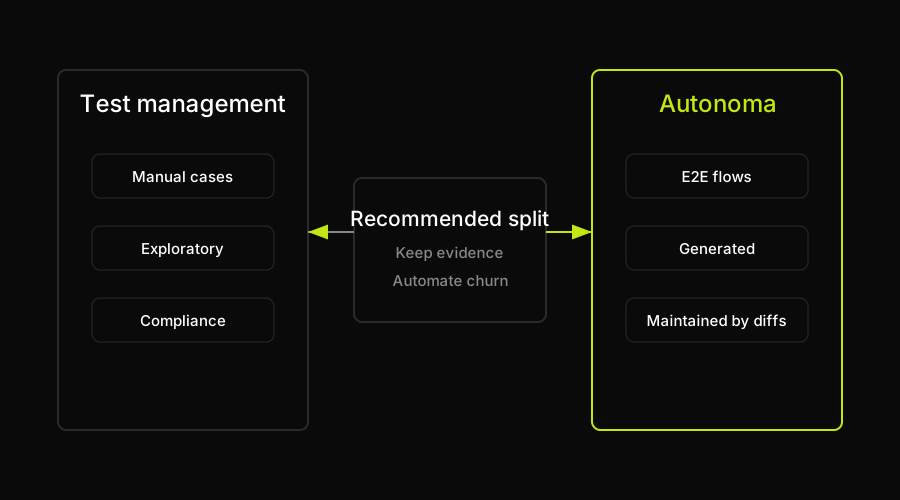
The practical split: PractiTest for human evidence, a codebase-first agent for automatable E2E cases that don't need hand-maintenance.
Final thoughts
PractiTest's pricing page won't give you a number, and that's by design: quote-based per-user licensing lets vendors price mid-market and enterprise deals individually rather than compete on a published rate card. What you can control, regardless of what PractiTest ultimately quotes you, is the size of the test backlog that quote is priced against, and Autonoma is relevant only where that backlog is automatable E2E regression rather than manual evidence.
Qase and Testmo show that published per-user and flat-team pricing are real alternatives if PractiTest's model doesn't fit your team's shape. But before switching test management vendors purely to chase a smaller quote, it's worth asking how much of your current backlog is manual overhead for tests that could run themselves. If Autonoma is already generating and maintaining those E2E cases from the codebase, that part of the renewal should not be driving PractiTest seat count at all. That's a cost that doesn't show up on any vendor's pricing page, and it compounds every year headcount doesn't shrink.
FAQ
PractiTest does not publish specific pricing on its site. It uses per-user licensing sold through a custom quote, with the final price depending on your seat count, which feature tier you need (standard vs. enterprise-level security and support), and contract length. You'll need to contact PractiTest sales directly for an actual number; no reliable public rate card exists as of this writing.
PractiTest has historically offered a free trial period so prospective customers can evaluate the platform before committing to a quote-based contract. Trial length and terms can change, so confirm current availability directly on practitest.com or with a PractiTest sales representative before assuming trial access.
PractiTest is priced per user (per full seat), with a separate lower-cost seat type commonly available for read-only or reviewer access. Pricing is quote-based rather than published, meaning you contact sales, provide your team size and feature requirements, and receive a custom proposal, typically on an annual contract.
PractiTest is worth it for QA teams that need a dedicated system of record for manual test cases, requirements traceability, and audit-ready reporting, particularly in regulated industries. It's a weaker fit if most of your test backlog is automatable end-to-end regression coverage, since you'd be paying a growing per-seat quote to manage tests that a codebase-first testing agent could generate and maintain instead.
It depends on your team size and structure. PractiTest is quote-based with no public numbers, so a direct comparison requires getting an actual quote. Qase publishes a free tier and public per-user pricing for its paid plans, which makes it easier to estimate costs upfront for small-to-mid teams. For larger teams, the per-seat model both PractiTest and Qase share means costs still scale with headcount either way; Testmo's flat monthly team pricing is worth comparing if seat count is your main cost driver.


